Quotessence
Home / Authors / Immanuel Kant Books
Immanuel Kant

Immanuel Kant Books

Philosopher

On Education

A source page for quotes linked to Immanuel Kant.
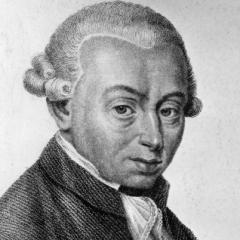
0 quotes

Perpetual Peace

A source page for quotes linked to Immanuel Kant.

0 quotes

Kant

A source page for quotes linked to Immanuel Kant.

0 quotes

Basic Writings

A source page for quotes linked to Immanuel Kant.

0 quotes

Related Quotes

“Enlightenment is man's release from his self-incurred tutelage. Tutelage is man's inability to make use of his understanding without direction from another. Self-incurred is this tutelage when its cause lies not in lack of reason but in lack of resolution and courage to use it without direction from another. Sapere aude! 'Have courage to use your own reason!'- that is the motto of enlightenment.”

“Skepticism is thus a resting-place for human reason, where it can reflect upon its dogmatic wanderings and make survey of the region in which it finds itself, so that for the future it may be able to choose its path with more certainty. But it is no dwelling-place for permanent settlement. Such can be obtained only through perfect certainty in our knowledge, alike of the objects themselves and of the limits within which all our knowledge of objects is enclosed.”

“The disease of the hypochondriac consists in this: that certain bodily sensations do not so much indicate a really existing disease in the body as rather merely excite apprehensions of its existence: and human nature is so constituted – a trait which the animal lacks – that it is able to strengthen or make permanent local impressions simply by paying attention to them, whereas an abstraction – whether produced on purpose or by other diverting occupations – lessen these impressions, or even effaces them altogether.”

“[We] believe, or assume to believe, that [we] satisfy [our] duty to [humanity] if [we] first provide fully for [our] own material wants and then pay [our] tribute to the universal provider by giving a little to the poor. But if [we] were scrupulously just there would be no poor to whom we could give alms and think that we had realized the merit of benevolence. Better than charity, better than giving of our surplus is conscientious and scrupulously fair conduct and a helping hand in need.”

“Our knowledge springs from two fundamental sources of our mind; the first is to receive representations (receptivity of impressions), the second is the faculty of knowing an object through these representations (spontaneity of concepts). Through the first an object is *given* to us, through the second the object is *thought* in relation to that representation (which is a mere determination of the mind). Intuition and concepts constitute, therefore, the elements of all our knowledge, so that neither concepts without an intuition in some way corresponding to them, nor intuition without concepts can yield knowledge. Both are either pure or empirical. They are empirical when they contain sensation (sensation presupposes the actual presence of the object). They are *pure* when no sensation is mixed in with the representation. Sensation may be called the matter of sensible knowledge. Pure intuition, therefore, contains only the form under which something is intuited, and the pure concepts contains only the form of thinking an object in general. Pure intuitions and pure concepts alone are possible *a priori*, empirical intuitions and empirical concepts only *a posteriori*. We call *sensibility* the *receptivity* of our mind to receive representations insofar as it is in some wise affected, while the *understanding*, on the other hand, is our faculty of producing representations by ourselves, or the *spontaneity* of knowledge. We are so constituted that our intuition can never be other than *sensible*; that is, it contains only the mode in which we are affected by objects. The faculty, on the contrary, which enables us to *think* the object of sensible intuition is the *understanding*. Neither of these properties is to be preferred to the other. Without sensibility no object would be given to us, without understanding no object would be thought. Thoughts without content are empty, intuitions without concepts are blind. It is, therefore, just as necessary to make our concepts sensible (i.e., to add the object to them in intuition) as to make our intuitions understandable (i.e., to bring them under concepts). These two faculties or capacities cannot exchange their functions. The understanding cannot intuit anything, the senses cannot think anything. Only from their union can knowledge arise. But this is no reason for confounding their respective contributions; rather, it gives us a strong reason for carefully separating and distinguishing the one from the other. We therefore distinguish the science of the rules of sensibility in general, i.e., aesthetic, from the science of the rules of the understanding in general, i.e., logic." ―Transcendental Doctrine of Elements. Transcendental Logic: The Idea of a Transcendental Logic”

“It will be seen how there can be the idea of a special science, the *critique of pure reason* as it may be called. For reason is the faculty which supplies the *principles* of *a priori* knowledge. Pure reason therefore is that which contains the principles of knowing something entirely *a priori*. An *organon* of pure reason would be the sum total of the principles by which all pure *a priori* knowledge can be acquired and actually established. Exhaustive application of such an organon would give us a system of pure reason. But as this would be a difficult task, and as at present it is still doubtful whether indeed an expansion of our knowledge is possible here at all, we may regard a science that merely judges pure reason, its sources and limits, as the *propaedeutic* to the system of pure reason. In general, it would have to be called only a *critique*, not a *doctrine* of pure reason. Its utility, in regard to speculation, would only be negative, for it would serve only to purge rather than to expand our reason, and, which after all is a considerable gain, would guard reason against errors. I call all knowledge *transcendental* which deals not so much with objects as with our manner of knowing objects insofar as this manner is to be possible *a priori*. A system of such concepts would be called *transcendental philosophy*. But this is still, as a beginning, too great an undertaking. For since such a science must contain completely both analytic and synthetic *a priori* knowledge, it is, as far as our present purpose is concerned, much too comprehensive. We will be satisfied to carry the analysis only so far as is indispensably necessary in order to understand in their whole range the principles of *a priori* synthesis, with which alone we are concerned. This investigation, which properly speaking should be called only a transcendental critique but not a doctrine, is all we are dealing with at present. It is not meant to expand our knowledge but only to correct it, and to become the touchstone of the value, or lack of value, of all *a priori* knowledge. Such a critique is therefore the preparation, as far as possible, for a new organon, or, if this should turn out not to be possible, for a canon at least, according to which, thereafter, the complete system of a philosophy of pure reason, whether it serve as an expansion or merely as a limitation of its knowledge, may be carried out both analytically and synthetically. That such a system is possible, indeed that it need not be so comprehensive as to cut us off from the hope of completing it, may already be gathered from the fact that it would have to deal not with the nature of things, which is inexhaustible, but with the understanding which makes judgments about the nature of things, and with this understanding again only as far as its *a priori* knowledge is concerned. The supply of this *a priori* knowledge cannot be hidden from us, as we need not look for it outside the understanding, and we may suppose this supply to prove sufficiently small for us to record completely, judge as to its value or lack of value and appraise correctly. Still less ought we to expect here a critique of books and systems of pure reason, but only the critique of the faculty of pure reason itself. Only once we are in possession of this critique do we have a reliable touchstone for estimating the philosophical value of old and new works on this subject. Otherwise, an unqualified historian and judge does nothing but pass judgments upon the groundless assertions of others by means of his own, which are equally groundless.”

“[Refiriéndose al Louvre] Si alguien me pregunta si encuentro bello el palacio que veo ante mí, puedo decir: no me gustan ese tipo de cosas [...]; puedo, aún más, reprochar en buen estilo rousseauniano la vanidad de los grandes, que emplean el sudor del pueblo en cosas tan superfluas [...]. Se me puede conceder y aprobar todo esto; pero no es de eso de lo que trata aquí [...]. Para hacer de juez en materia de gusto, uno no debe estar en lo más mínimo predispuesto en favor de la existencia de la cosa, sino ser a este respecto por completo indiferente.”

“...[R]eason of itself, independent on all experience, ordains what ought to take place, that accordingly actions of which perhaps the world has hitherto never given an example, the feasibility even if which might be very much doubted by one who founds everything on experience, are nevertheless inflexibly commanded by reason; that, for example, even though there might never yet have been a sincere friend, yet not a whit the less is pure sincerity in friendship required of every man...”

“An age cannot bind itself and ordain to put the succeeding one into such a condition that it cannot extend its (at best very occasional) knowledge , purify itself of errors, and progress in general enlightenment. That would be a crime against human nature, the proper destination of which lies precisely in this progress and the descendants would be fully justified in rejecting those decrees as having been made in an unwarranted and malicious manner. The touchstone of everything that can be concluded as a law for a people lies in the question whether the people could have imposed such a law on itself.”

“The beautiful in nature is a question of the form of the object, and it consists in limitation, whereas the sublime is to be found in an object even devoid of form, so far as it immediately involves, or else by its presence evokes, a representation of limitlessness, yet with a super-added thought of its totality. Accordingly the beautiful seems to be regarded as a presentation of an indeterminate concept of the understanding , the sublime as a presentation of an indeterminate concept of reason, Hence, the delight is in the former case coupled with the representation of quality, but in this case with that of quantity. Moreover, the former delight is very different from the latter in kind. For the beautiful is directly attended with a feeling of the furtherance of life, and thus is compatible with charms and a playful imagination. On the other hand, the feeling of the sublime is a pleasure that only arrises indirectly, being brought about by the feeling of a momentary check of the vital forces followed all at once by discharge all the more powerful, and so it is an emotion that seems to be no play, but a serious matter of the imagination. Hence charms are also incompatible with it; and, since the mind is not simply attracted by the object, but is also alternately repelled thereby, the delight in the sublime does not show how much involve positive pleasure as admiration or respect, i.e. merits the name of a negative pleasure.”

“If now we attend to ourselves on occasion of any transgression of duty, we shall find that we in fact do not will that our maxim should be universal law, for that is impossible for us; on the contrary, we will that the opposite should remain a universal law, only we assume the liberty of making an exception in our own favor or (just for this time only) in favor of our inclination. Consequently, if we considered all cases from one and the same point of view, namely, that of reason, we should find a contradiction in our own will, namely, that a certain principle should be objectively necessary as a universal law, and yet subjectively should not be universal, but admit of exceptions. As, however, we at one moment regard our action from the point of view of a will wholly conformed to reason, and then again look at the same action from the point of view of a will affected by inclination, there is not really any contradiction, but an antagonism of inclination to the precept of reason, whereby the universality of the principle is changed into mere generality, so that the practical principle of reason shall meet the maxim half way. Now, although this cannot be justified in our own impartial judgement, yet it proves that we do really recognize the validity of the categorical imperative and (with all respect for it) only allow ourselves a few exceptions which we think unimportant and forced from us.”

“As nature has uncovered from under this hard shell the seed for which she most tenderly cares - the propensity and vocation to free thinking - this gradually works back upon the character of the people, who thereby gradually become capable of managing freedom; finally, it affects the principles of government, which finds it to its advantage to treat men, who are now more than machines, in accordance with their dignity.”

“[A man] finds himself forced by necessity to borrow money. He knows that he will not be able to repay it, but sees also that nothing will be lent to him unless he promises stoutly to repay it in definite time. He desires to make this promise, but he has still so much conscience as to ask himself: Is it not unlawful and inconsistent with duty to get out of a difficulty in this way? Suppose, however, that he resolves to do so, then the maxim of his action would be expressed thus: When I think myself in want of money, I will borrow money and promise to repay it, although I know that I never can do so. Now this principle of self-love or of one's own advantage may perhaps be consistent with my whole future welfare; but the question now is, Is it right? I change then the suggestion of self-love into a universal law, and state the question thus: How would it be if my maxim were a universal law? Then I see at once that it could never hold as a universal law of nature, but would necessarily contradict itself. For supposing it to be a universal law that everyone when he thinks himself in a difficulty should be able to promise whatever he pleases, with the purpose of not keeping his promise, the promise itself would become impossible, as well as the end that one might have in view in it, since no one would consider that anything was promised to him, but would ridicule all such statements as vain pretenses.”

“One cannot be given too many or too frequent warnings against this negligent or even base way of thinking, that seeks out the principle among empirical motivations and laws, since human reason in its weariness gladly reposes on this pillow and, in the dream of sweet illusions (which lets it embrace a cloud instead of Juno), supplants the place of morality with a bastard patched together from limbs of quite diverse ancestry, which looks similar to whatever anyone wants to see, but not to virtue, for him who has once beheld it in its true shape.”

“...new prejudices will serve as well as old ones to harness the great unthinking masses. For this enlightenment, however, nothing is required but freedom, and indeed the most harmless among all the things to which this term can properly be applied. It is the freedom to make public use of one's reason at every point. But I hear on all sides, 'Do not argue!' The Officer says: 'Do not argue but drill!' The tax collector: 'Do not argue but pay!' The cleric: 'Do not argue but believe!' Only one prince in the world says, 'Argue as much as you will, and about what you will, but obey!' Everywhere there is restriction on freedom.”

“It is in these very items of knowledge which go beyond the world of senses, where experience can neither guide nor correct us, that reason carries out its investigations, which owing to their importance we consider to be far more excellent, and in their final aim far more sublime, than anything our understanding can learn in the field of appearances. Nay, we would rather dare anything, even at the risk of error, than surrender such investigations, either on ground of their precariousness or from any feeling of disdain or indifference. These unavoidable problems of pure reason itself are God, freedom, and immortality.”

“Laziness and cowardice are the reasons why so great a portion of mankind, after nature has long since discharged them from external direction (naturaliter maiorennes), nevertheless remains under lifelong tutelage, and why it is so easy for others to set themselves up as their guardians. It is so easy not to be of age. If I have a book which understands for me, a pastor who has a conscience for me, a physician who decides my diet, and so forth, I need not trouble myself. I need not think, if I can only pay - others will easily undertake the irksome work for me. That the step to competence is held to be very dangerous by the far greater portion of mankind...”

“In the physical constitution of an organized being, that is, a being adapted suitably to the purposes of life, we assume it as a fundamental principle that no organ for any purpose will be found but what is also the fittest and best adapted for that purpose. Now in a being which has reason and a will, if the proper object of nature were its conservation, its welfare, in a word, its happiness, then nature would have hit upon a very bad arrangement in selecting the reason of the creature to carry out this purpose. For all the actions which the creature has to perform with a view to this purpose, and the whole rule of its conduct, would be far more surely prescribed to it by instinct, and that end would have been attained thereby much more certainly that it ever can be by reason. Should reason have been communicated to this favored creature over and above, it must only have served it to contemplate the happy constitution of its nature, to admire it, to congratulate itself thereon, and to feel thankful for it to the beneficent cause, but not that it should subject its desires to that weak and delusive guidance, and meddle bunglingly with the purpose of nature. In a word, nature would have taken care that reason should not break forth into practical exercise, nor have the presumption, with its weak insight, to think out for itself the plan of happiness and the means of attaining it. Nature would not only have taken on herself the choice of the ends but also of the means, and with wise foresight would have entrusted both to instinct.”

“Even as to himself, a man cannot pretend to know what he is in himself from the knowledge he has by internal sensation. For as he does not as it were create himself, and does not come by the conception of himself a priori but empirically, it naturally follows that he can obtain his knowledge even of himself only by the inner sense, and consequently only through the appearances of his nature and the way in which his consciousness is affected. At the same time, beyond these characteristics of his own subject, made up of mere appearances, he must necessarily suppose something else as their basis, namely, his ego, whatever its characteristics in itself may be... Now man really finds in himself a faculty by which he distinguishes himself from everything else, even from himself as affected by objects, and that is reason. This being pure spontaneity is even elevated above the understanding. For although the latter is a spontaneity and does not, like sense, merely contain intuitions that arise when we are affected by things (and are therefore passive), yet it cannot produce from its activity any other conceptions than those which merely serve to bring the intuitions of sense under rules, and thereby to unite them in one consciousness, and without this use of the sensibility it could not think at all; whereas, on the contrary, reason shows so pure a spontaneity in the case of what I call "ideas" [Ideal Conceptions] that it thereby far transcends everything that the sensibility can give it, and exhibits its most important function in distinguishing the world of sense from that of understanding, and thereby prescribing the limits of the understanding itself.”

“...We find that the more a cultivated reason applies itself with deliberate purpose to the enjoyment of life and happiness, so much the more does the man fail of true satisfaction... even from the sciences... they find that they have, in fact, only brought more trouble on their shoulders rather than gained in happiness; and they end by envying rather than despising the more common stamp of men who keep closer to the guidance of mere instinct, and do not allow their reason much influence on their conduct... [T]here lies at the root of these judgments the idea that our existence has a different and far nobler end, for which, and not for happiness, reason is properly intended...”

“Metaphysics... is nothing but the inventory of all we possess through pure reason, ordered systematically. Nothing here can escape us, because what reason brings forth entirely out of itself cannot be hidden, but is brought to light by reason itself as soon as reason's common principle has been discovered. The perfect unity of this kind of cognition, and the fact that it arises solely out of pure concepts without any influence that would extend or increase it from experience or even particular intuition, which would lead to a determinate experience, make this unconditioned completeness not only feasible but also necessary. Tecum habita, et noris quam sit tibi curta supellex. Dwell in your own house, and you will know how simple your possessions are. - Persius”

“(On the seeming futility of metaphysics) Why then has nature afflicted our reason with the restless striving for such a path, as if it were one of reason's most important occupations? Still more, how little cause have we to place trust in our reason if in one of the most important parts of our desire for knowledge it does not merely forsake us but even entices us with delusions and in the end betrays us! Or if the path has merely eluded us so far, what indications may we use that might lead us to hope that in renewed attempts we will be luckier than those who have gone before us?”

“...Reason should take on anew the most difficult of all its tasks, namely, that of self-knowledge, and to institute a court of justice, by which reason may secure its rightful claims while dismissing all its groundless pretensions, and this not by mere decrees but according to its own eternal and unchangeable laws; and this court is none other than the critique of pure reason itself.”

“[At the beginning of modern science], a light dawned on all those who study nature. They comprehended that reason has insight only into what it itself produces according to its own design; that it must take the lead with principles for its judgments according to constant laws and compel nature to answer its questions, rather than letting nature guide its movements by keeping reason, as it were, in leading-strings; for otherwise accidental observations, made according to no previously designed plan, can never connect up into a necessary law, which is yet what reason seeks and requires. Reason, in order to be taught by nature, must approach nature with its principles in one hand, according to which alone the agreement among appearances can count as laws, and, in the other hand, the experiments thought in accordance with these principles - yet in order to be instructed by nature not like a pupil, who has recited to him whatever the teacher wants to say, but like an appointed judge who compels witnesses to answer the questions he puts to them. Thus even physics owes the advantageous revolution in its way of thinking to the inspiration that what reason would not be able to know of itself and has to learn from nature, it has to seek in the latter (though not merely ascribe to it) in accordance with what reason itself puts into nature. This is how natural science was first brought to the secure course of a science after groping about for so many centuries.”

“...[A]ll the elements which belong to the notion of happiness are altogether empirical, that is, they must be borrowed from experience, and nevertheless the idea of happiness requires an absolute whole, a maximum of welfare in my present and all future circumstances. Now it is impossible that the most clear-sighted and at the same time most powerful being (supposed finite) should frame to himself a definite conception of what he really wills in this. Does he will riches, how much anxiety, envy, and snares might he not thereby draw upon his shoulders? Does he will knowledge and discernment, perhaps it might prove to be only an eye so much the sharper to show him so much the more fearfully the evils that are now concealed from him and that cannot be avoided, or to impose more wants on his desires, which already give him concern enough. Would he have long life? Who guarantees to him that it would not be a long misery? Would he at least have health? How often has uneasiness of the body restrained from excesses into which perfect health would have allowed one to fall, and so on? In short, he is unable, on any principle, to determine with certainty what would make him truly happy; because to do so he would need to be omniscient.”