Quotessence
Home / Authors / Jamaica Kincaid
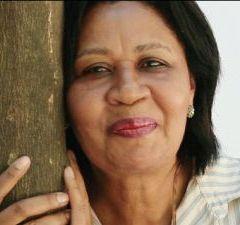
Jamaica Kincaid

Jamaica Kincaid Quotes

Novelist

Filter quotes by topic

Famous Jamaica Kincaid Quotes

“Another thing I like to say to my students is this: "How many Corinthians read Paul's letters?" The answer is none. They couldn't have cared less! There aren't even any Corinthians left, but Paul's letters persist. Paul was not a professional writer. He was called to something, and he sent his letters. That's a good way to look at it. That you might be making something that nobody cares about, but you have to do it. It's not that people should care, but that you should care.”

“Had the Holocaust happened in Tahiti or the Congo, as it has; had it happened in South America, as it has; had it happened in the West Indies, as it has - you must remember that within fifty years of Columbus's arrival, only the bones remained of the people called the Arawaks, with one or two of them in Spain as specimens. Had the Holocaust committed under the Nazis happened somewhere else, we wouldn't be talking about it the way we talk about it.”

“What frustrates me is to see African-Americans behave as though what European-Americans say is worthwhile. It simply isn't. It's just some silly people who can make laws and have the power to enforce them. I'm often amazed at the conversations black people have about themselves. They ought to be having these conversations about white people. It's white people who are flawed and at fault.”

“The strange thing about my life is that I came to America at about the time when racial attitudes were changing. This was a big help to me. Also, the people who were most cruel to me when I first came to America were black Americans. They made absolute fun of the way I talked, the way I dressed. I couldn't dance. The people who were most kind and loving to me were white people. So what can one make of that? Perhaps it was a coincidence that all the people who found me strange were black and all the people who didn't were white.”

“One day I was living silently in a personal hell, without anyone to tell what I felt, without even knowing that the feelings I had were possible to have; and then one day I was not living like that at all. I had begun to see the past like this: there is a line; you can draw it yourself, or sometimes it gets drawn for you; either way, there it is, your past, a collection of people you used to be and things you used to do. Your past is the person you no longer are, the situations you are no longer in.”