“I cannot speak well enough to be unintelligible.”
Source: Jane Austen's Northanger Abbey and Persuasion. Illustrated by Hugh Thomson.
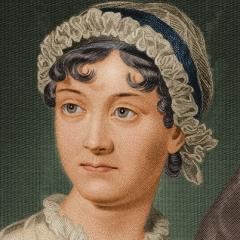
“I cannot speak well enough to be unintelligible.”
“One man's style must not be the rule of another's.”
“Vanity working on a weak head, produces every sort of mischief.”
“Where an opinion is general, it is usually correct.”
“Husbands and wives generally understand when opposition will be vain.”
“It is always incomprehensible to a man that a woman should ever refuse an offer of marriage.”
“Nobody minds having what is too good for them.”
“What wild imaginations one forms where dear self is concerned! How sure to be mistaken!”
“They are much to be pitied who have not been given a taste for nature early in life.”
“But there was happiness elsewhere which no description can reach.”
“Fine dancing, I believe, like virtue, must be its own reward.”
“I go too long without picking up a good book, I feel like I've done nothing useful with my life.”
“A sick child is always the mother's property; her own feelings generally make it so.”
“There are few people whom I really love and still fewer of whom I think well.”
“Women are the only correspondents to be depended on.”
“It is the misfortune of poetry, to be seldom safely enjoyed by those who enjoy it completely.”
“You shall not, for the sake of one individual, change the meaning of principle and integrity.”
“Silly things do cease to be silly if they are done by sensible people in an impudent way.”
““It is not everyone,” said Elinor, “who has your passion for dead leaves.””
“Cold-hearted Elinor! Oh! Worse than cold-hearted! Ashamed of being otherwise.--Marianne Dashwood”
“I always deserve the best treatment because I never put up with any other.”
“A man does not recover from such devotion of the heart to such a woman! He ought not; he does not.”