Quotessence
Home / Authors / John Kenneth Galbraith
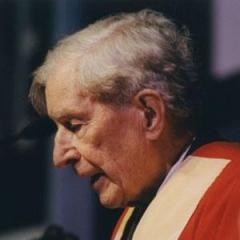
John Kenneth Galbraith

John Kenneth Galbraith Quotes

Economist

Filter quotes by topic

Famous John Kenneth Galbraith Quotes

“I was in charge of price controls in World War II and had a ceiling on overall prices. Everybody who was subject to general maximum price regulation wanted an exception and went to Congress to persuade a Congressman, or a group of people on the Hill, that I was being a menace to their industry.”

“In the usual (though certainly not in every) public decision on economic policy, the choice is between courses that are almost equally good or equally bad. It is the narrowest decisions that are most ardently debated. If the world is lucky enough to enjoy peace, it may even one day make the discovery, to the horror of doctrinaire free-enterprisers and doctrinaire planners alike, that what is called capitalism and what is called socialism are both capable of working quite well.”

“In Europe and the United States the two decades following the Second World War will for long be remembered as a very good time, the time when capitalism really worked. Everywhere in the industrialized countries production increased. Unemployment was everywhere low. Prices were nearly stable. When production lagged and unemployment rose, governments intervened to take up the slack, as Keynes had urged.”

“World War II revealed two of the enduring features of the Keynesian Revolution. One was the moral difference between spending for welfare and spending for war. During the Depression very modest outlays for the unemployed seemed socially debilitating, economically unsound. Now expenditures many times greater for weapons and soldiers were perfectly safe. It's a difference that still persists.”

“We live surrounded by a systematic appeal to a dream world which all mature, scientific reality would reject. We, quite literally, advertise our commitment to immaturity, mendacity and profound gullibility. It is as the hallmark of the culture. And it is justified as being economically indispensable.”

“There can be few fields of human endeavor in which history counts for so little as in the world of finance.Past experience, to the extent that it is part of memory at all, is dismissed as the primitive refuge of the those who do not have insight to appreciate the incredible wonders of the present.”

“Among all the world's races, some obscure Bedouin tribes possibly apart, Americans are the most prone to misinformation. This is not the consequence of any special preference for mendacity, although at the higher levels of their public administration that tendency is impressive. It is rather that so much of what they themselves believe is wrong.”