Quotessence
Home / Authors / Laozi
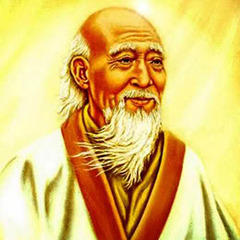
Laozi

Laozi Quotes

Philosopher

Filter quotes by topic

Famous Laozi Quotes

“The best athlete wants his opponent at his best. The best general enters the mind of his enemy. The best businessman serves the communal good. The best leader follows the will of the people. All of the embody the virtue of non-competition. Not that they don't love to compete, but they do it in the spirit of play. In this they are like children and in harmony with the Tao.”

“The ancient Masters didn't try to educate the people, but kindly taught them to not-know. When they think that they know the answers, people are difficult to guide. When they know that they don't know, people can find their own way. If you want to learn how to govern, avoid being clever or rich. The simplest pattern is the clearest. Content with an ordinary life, you can show all people the way back to their own true nature.”

“If a country is governed with tolerance, the people are comfortable and honest. If a country is governed with repression, the people are depressed and crafty. When the will to power is in charge, the higher the ideals, the lower the results. Try to make people happy, and you lay the groundwork for misery. Try to make people moral, and you lay the groundwork for vice. Thus the Master is content to serve as an example and not to impose her will. She is pointed, but doesn't pierce. Straightforward, but supple. Radiant, but easy on the eyes.”

“The Tao is the center of the universe, the good man's treasure, the bad man's refuge. Honors can be bought with fine words, respect can be won with good deeds; but the Tao is beyond all value, and no one can achieve it. Thus, when a new leader is chosen, don't offer to help him with your wealth or your expertise. Offer instead to teach him about the Tao. Why did the ancient Masters esteem the Tao? Because, being one with the Tao, when you seek, you find; and when you make a mistake, you are forgiven. That is why everybody loves it.”

“Act without doing; work without effort. Think of the small as large and the few as many. Confront the difficult while it is still easy; accomplish the great task by a series of small acts. The Master never reaches for the great; thus she achieves greatness. When she runs into a difficulty, she stops and gives herself to it. She doesn't cling to her own comfort; thus problems are no problem for her.”

“The great Way is easy, yet people prefer the side paths. Be aware when things are out of balance. Stay centered within the Tao. When rich speculators prosper While farmers lose their land; when government officials spend money on weapons instead of cures; when the upper class is extravagant and irresponsible while the poor have nowhere to turn- all this is robbery and chaos. It is not in keeping with the Tao.”

“The Master has no mind of her own. She works with the mind of the people. She is good to people who are good. She is also good to people who aren't good. This is true goodness. She trusts people who are trustworthy. She also trusts people who aren't trustworthy. This is true trust. The Master's mind is like space. People don't understand her. They look to her and wait. She treats them like her own children.”

“In harmony with the Tao, the sky is clear and spacious, the earth is solid and full, all creature flourish together, content with the way they are, endlessly repeating themselves, endlessly renewed. When man interferes with the Tao, the sky becomes filthy, the earth becomes depleted, the equilibrium crumbles, creatures become extinct. The Master views the parts with compassion, because he understands the whole. His constant practice is humility. He doesn't glitter like a jewel but lets himself be shaped by the Tao, as rugged and common as stone.”

“The Tao gives birth to One. One gives birth to Two. Two gives birth to Three. Three gives birth to all things. All things have their backs to the female and stand facing the male. When male and female combine, all things achieve harmony. Ordinary men hate solitude. But the Master makes use of it, embracing his aloneness, realizing he is one with the whole universe.”

“The great Tao flows everywhere. All things are born from it, yet it doesn't create them. It pours itself into its work, yet it makes no claim. It nourishes infinite worlds, yet it doesn't hold on to them. Since it is merged with all things and hidden in their hearts, it can be called humble. Since all things vanish into it and it alone endures, it can be called great. It isn't aware of its greatness; thus it is truly great.”

“She who is centered in the Tao can go where she wishes, without danger. She perceives the universal harmony, even amid great pain, because she has found peace in her heart. Music or the smell of good cooking may make people stop and enjoy. But words that point to the Tao seem monotonous and without flavor. When you look for it, there is nothing to see. When you listen for it, there is nothing to hear. When you use it, it is inexhaustible.”

“The Tao never does anything, yet through it all things are done. If powerful men and women could venter themselves in it, the whole world would be transformed by itself, in its natural rhythms. People would be content with their simple, everyday lives, in harmony, and free of desire. When there is no desire, all things are at peace.”

“Do you want to improve the world? I don't think it can be done. The world is sacred. It can't be improved. If you tamper with it, you'll ruin it. If you treat it like an object, you'll lose it. There is a time for being ahead, a time for being behind; a time for being in motion, a time for being at rest; a time for being vigorous, a time for being exhausted; a time for being safe, a time for being in danger. The Master sees things as they are, without trying to control them. She lets them go their own way, and resides at the center of the circle.”

“Whoever relies on the Tao in governing men doesn't try to force issues or defeat enemies by force of arms. For every force there is a counterforce. Violence, even well intentioned, always rebounds upon oneself. The Master does his job and then stops. He understands that the universe is forever out of control, and that trying to dominate events goes against the current of the Tao. Because he believes in himself, he doesn't try to convince others. Because he is content with himself, he doesn't need others' approval. Because he accepts himself, the whole world accepts him.”

“The Tao can't be perceived. Smaller than an electron, it contains uncountable galaxies. If powerful men and women could remain centered in the Tao, all things would be in harmony. The world would become a paradise. All people would be at peace, and the law would be written in their hearts. When you have names and forms, know that they are provisional. When you have institutions, know where their functions should end. Knowing when to stop, you can avoid any danger. All things end in the Tao as rivers flow into the sea.”

“Express yourself completely, then keep quiet. Be like the forces of nature: when it blows, there is only wind; when it rains, there is only rain; when the clouds pass, the sun shines through. If you open yourself to the Tao, you are at one with the Tao and you can embody it completely. If you open yourself to insight, you are at one with insight and you can use it completely. If you open yourself to loss, you are at one with loss and you can accept it completely. Open yourself to the Tao, then trust your natural responses; and everything will fall into place.”

“The heavy is the root of the light. The unmoved is the source of all movement. Thus the Master travels all day without leaving home. However splendid the views, she stays serenely in herself. Why should the lord of the country flit about like a fool? If you let yourself be blown to and fro, you lose touch with your root. If you let restlessness move you, you lose touch with who you are.”

“A good traveler has no fixed plans and is not intent upon arriving. A good artist lets his intuition lead him wherever it wants. A good scientist has freed himself of concepts and keeps his mind open to what is. Thus the Master is available to all people and doesn't reject anyone. He is ready to use all situations and doesn't waste anything. This is called embodying the light. What is a good man but a bad man's teacher? What is a bad man but a good man's job? If you don't understand this, you will get lost, however intelligent you are. It is the great secret.”

“Empty your mind of all thoughts. Let your heart be at peace. Watch the turmoil of beings, but contemplate their return. Each separate being in the universe returns to the common source. Returning to the source is serenity. If you don't realize the source, you stumble in confusion and sorrow. When you realize where you come from, you naturally become tolerant, disinterested, amused, kindhearted as a grandmother, dignified as a king. Immersed in the wonder of the Tao, you can deal with whatever life brings you, and when death comes, you are ready.”

“The Tao is infinite, eternal. Why is it eternal? It was never born; thus it can never die. Why is it infinite? It has no desires for itself; thus it is present for all beings. The Master stays behind; that is why she is ahead. She is detached from all things; that is why she is one with them. Because she has let go of herself, she is perfectly fulfilled.”

“If you overesteem great men, people become powerless. If you overvalue possessions, people begin to steal. The Master leads by emptying people's minds and filling their cores, by weakening their ambition and toughening their resolve. He helps people lose everything they know, everything they desire, and creates confusion in those who think that they know. Practice not-doing, and everything will fall into place.”

“There is a thing inherent and natural which existed before heaven and earth. Motionless and fathomless, It stands alone and never changes; It pervades everywhere and never becomes exhausted. It may be regarded as the Mother of the Universe. I do not know its name. If I am forced to give It a name, I call it Tao, and I name it as supreme.”