“What has to be accepted, the given, is - so one could say - forms of life .”
Source: A companion to Wittgenstein's
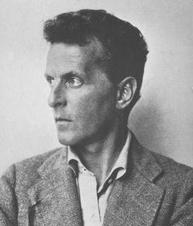
“What has to be accepted, the given, is - so one could say - forms of life .”
“You can't be reluctant to give up your lie and still tell the truth.”
“Every explanation is after all an hypothesis.”
“So we do sometimes think because it has been found to pay.”
“It's only by thinking even more crazily than philosophers do that you can solve their problems.”
“It is clear that the causal nexus is not a nexus at all.”
“The difficulty in philosophy is to say no more than we know.”
“What we do is to bring words back from their metaphysical to their everyday use.”
“One age misunderstands another; and a petty age misunderstands all the others in its own ugly way.”
“Philosophical problems arise when language goes on holiday”
“At the end of reasons comes persuasion.”
“No one can think a thought for me in the way that no one can don my hat for me.”
“That which cannot be said must not be said. That which cannot be said, one must be silent thereof.”
“Just be indipendent of the external world, so you don't have to fear for what's in it.”
“One is unable to notice something because it is always before one's eyes.”
“Only a man who lives not in time but in the present is happy.”