“All actual life is encounter.”
Source: I and Thou
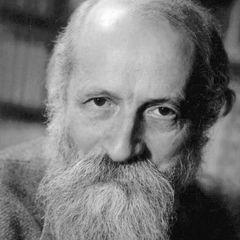
“All actual life is encounter.”
“If a person kills a tree before its time, it is like having murdered a soul.-Rabbi Nachman”
“Mundus vult decipi: the world wants to be deceived.”
“We can be redeemed only to the extent to which we see ourselves.”
“Let us, cautious in diction, And mighty in contradiction, Love powerfully.”
“There is no room for God in him who is full of himself.”
“God made so many different kinds of people; why would God allow only one way to worship?”
“Inscrutably involved, we live in the currents of universal reciprocity.”
“The perfection of any matter, the highest or the lowest, touches on the divine.”
“The prophet is appointed to oppose the kind, and even more: history.”
“We should stake our whole existence on our willingness to explore and experience.”
“One must be truly able to say I in order to know the mystery of the Thou in its whole truth.”
“We can learn to be whole by saying what we mean and doing what we say.”
“Our relationships live in the space between us which is sacred.”
“Everyone has in him something precious that is in no one else.”
“All journeys have secret destinations of which the traveller is unaware.”
“I don't like religion much, and I am glad that in the Bible the word is not to be found.”
“When a man has made peace within himself, he will be able to make peace in the whole world.”
“God dwells wherever man lets Him in.”