Quotessence
Home / Authors / Maurice Maeterlinck Books
Maurice Maeterlinck

Maurice Maeterlinck Books

Playwright

Our Eternity

A source page for quotes linked to Maurice Maeterlinck.
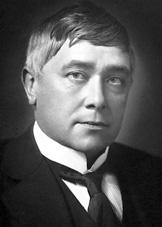
0 quotes

The Inner Beauty

A source page for quotes linked to Maurice Maeterlinck.

0 quotes

Related Quotes

“Look upon men and things with the inner eye, with its form and desire, never forgetting that the shadow they throw as they pass by, upon hillock or wall, is but the fleeting image of a mightier shadow, which, like the wing of an imperishable swan, floats over every soul that draws near to their soul. Do not believe that thoughts such as these can be mere ornaments, and without influence upon the lives of those who admit them. It is far more important that one’s life should be perceived than that it should be transformed; for no sooner has it been perceived, than it transforms itself of its own accord.”

“When we lose one we love, our bitterest tears are called forth by the memory of hours when we loved not enough. If we always had smiled on the one who is gone, there would be no despair in our grief; and some sweetness would cling to our tears, reminiscent of virtues and happiness. For our recollections of veritable love—which indeed is the act of virtue containing all others—call from our eyes the same sweet, tender tears as those most beautiful hours wherein memory was born.”

“Be good at the depth of you, and you will discover that those who surround you will be good even to the same depths. Nothing responds more infallibly to the secret cry of goodness than the secret cry of goodness that is near. While you are actively good in the invisible, all those who approach you will unconsciously do things that they could not do by the side of any other man.”

“May it not be the supreme aim of life thus to bring to birth the inexplicable within ourselves; and do we know how much we add to ourselves when we awake something of the incomprehensible that slumbers in every corner? Here you have awakened love which will not fall asleep again. … nothing can ever separate two souls which, for an instant, ‘have been good together.”

“Before we can bring happiness to others, we first must be happy ourselves; nor will happiness abide within us unless we confer it on others. If there be a smile upon our lips, those around us will soon smile too; and our happiness will become the truer and deeper as we see that these others are happy. "It is not seemly that I, who, willingly, have brought sorrow to none, should permit myself to be sad," said Marcus Aurelius, in one of his noblest passages.”

“It is the disaster of our entire existence that we live thus away from our soul, and stand in such dread of its slightest movement. Did we but allow it to smile frankly in its silence and its radiance, we should be already living an eternal life. We have only to think for an instant how much it succeeds in accomplishing during those rare moments when we knock off its chains – for it is our custom to enchain it as though it were distraught – what it does in love, for instance, for there we do permit it at times to approach the lattices of external life.”

“If I tell some one that I love him – as I may have told a hundred others – my words will convey nothing to him; but the silence which will ensue, if I do indeed love him, will make clear in what depths lie the roots of my love, and will in its turn give birth to a conviction, that shall itself be silent; and in the course of a lifetime, this silence and this conviction will never again be the same. …”

“And it is because we all of us know of this sombre power and its perilous manifestations, that we stand in so deep a dread of silence. We can bear, when need must be, the silence of ourselves, that of isolation: but the silence of many - silence multiplied - and above all the silence of a crowd - these are supernatural burdens, whose inexplicable weight brings dread to the mightiest soul.”

“It is a thing that knows no limit, and before it all men are equal; and the silence of king or slave, in presence of death, or grief, or love, reveals the same features, hides beneath its impenetrable mantle the self-same treasure. For this is the essential silence of our soul, our most inviolable sanctuary, and its secret can never be lost;”

“For what are in reality the things we call ‘Wisdom,’ ‘Virtue,’ ‘Heroism,’ ‘sublime hours,’ and ‘great moments of life,’ but the moments when we have more or less issued forth from ourselves, and have been able to halt, be it only for an instant, on the step of one of the eternal gates whence we see that the faintest cry, the most colourless thought, and most nerveless gestures do not drop into nothingness; …”

“We all live in the sublime. Where else can we live? That is the only place of life. … All that happens to us is divinely great, and we are always in the centre of a great world. But we must accustom ourselves to live like an angel who has just sprung to life, like a woman who loves, or a man on the point of death. If you knew that you were going to die to-night, or merely that you would have to go away and never return, would you, looking upon men and things for the last time, see them in the same light that you have hitherto seen them? Would you not love as you never yet have loved?”

“We are not wrong, perhaps, to be heedful of justice in the midst of a universe that heeds not at all; as the bee is not wrong to make honey in a world that itself can make none. But we are wrong to desire an external justice, since we know that it does not exist. Let that which is in us suffice. All is for ever being weighed and judged in our soul. It is we who shall judge ourselves; or rather, our happiness is our judge.”

“Death has come and atoned for all. I have no grievance against the soul of the man before me. Instinctively do I recognise that it soars high above the gravest faults and the cruellest wrongs (and how admirable and full of significance is this instinct!). If there linger still a regret within me, it is not that I am unable to inflict suffering in my turn, but it is perhaps that my love was not great enough and that my forgiveness has come too late. …”

“We should tell ourselves, once and for all, that it is the first duty of the soul to become as happy, complete, independent, and great as lies in its power. Herein is no egoism, or pride. To become effectually generous and sincerely humble there must be within us a confident, tranquil, and clear comprehension of all that we owe to ourselves.”

“Perhaps we do not yet know what the word “to love” means. There are within us lives in which we love unconsciously. To love thus means more than to have pity, to make inner sacrifices, to be anxious to help and give happiness; it is a thing that lies a thousand fathoms deeper, where our softest, swiftest, strongest words cannot reach it. At moments we might believe it to be a recollection, furtive but excessively keen, of great primitive unity. There is in this love a force that nothing can resist.”

“As you climb up a mountain towards nightfall, the trees and the houses, the steeple, the fields and the orchards, the road, and even the river, will gradually dwindle and fade, and at last disappear in the gloom that steals over the valley. But the threads of light that shine from the houses of men and pierce through the blackest of nights, these shine on undimmed. And every step that you take to the summit reveals but more lights, and more, in the hamlets asleep at your foot. For light, though so fragile, is perhaps the one thing of all that yields naught of itself as it faces immensity. Thus it is with our moral light too, when we look upon life from some slight elevation. It is well that reflection should teach us to disburden our soul of base passions; but it should not discourage, or weaken, our humblest desire for justice, for truth, and for love.”