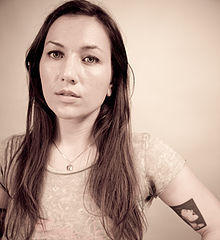
“When I was in college I started writing prose, because a very smart professor asked me what I like to read and I said, "Novels," and she said, "You should be writing them then." Memoir never even occurred to me. I think I was afraid of nonfiction and I was afraid of navel-gazing, and of being seen.” ThinkingShouldWritingSaidNovelCollegeSmartMemoirProseProfessorsNonfictionGazingVery SmartNavelNavel Gazing Author:Melissa Febos
“I more seriously considered publishing it under a pseudonym than I considered publishing it as fiction. I think the decision to write it as nonfiction happened at the very outset of the process, because the overwhelming impetus for writing this book was to understand what the experience meant, and to override my own reductions and rationalizations, whatever story I had that was not true. It didn't sit well with me and I needed to answer that. That's sort of the reason I write everything.” ThinkingWritingWellsBookReasonStoriesProcessMy OwnDecisionAnswersFictionHappenedNeededOverwhelmingNonfictionPublishingReductionImpetusPseudonyms Author:Melissa Febos
“The other reason I didn't want to fictionalize it is because one of the main points of publishing a memoir in nonfiction was that I wanted to write about what had been a very lonely experience. The books that most saved my life as a kid were the ones that articulated lonely experiences that I had thought were mine alone.” WantWritingBookReasonKidsWantedMinesLonelySavedMemoirNonfictionPublishing Author:Melissa Febos
“Fiction stymies me with its possibility. I can't see the bottom and I freeze, cling to the side, or just choke. In nonfiction, particularly that which takes personal narrative for its primary topic, I have a finite space and a finite amount of material. I can't fabricate material, I can only shape and burrow into it.” I CanSidesSpaceFictionPossibilityMaterialsAmountShapesBottomPrimariesNarrativeNonfictionTopicsFiniteChokeFreezeFabricate Author:Melissa Febos