Quotessence
Home / Authors / Muhammad Asad Books
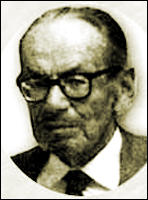
Muhammad Asad

Muhammad Asad Books

Journalist

Related Quotes

“Kad sam upoznao islam i prihvatio ga kao svoj životni put, mislio sam da je svim mojim pitanjima i traženjima došao kraj. Samo postepeno, vrlo postepeno, postojao sam svjestan da to nije kraj, jer prihvatiti životni put koji nas obavezuje bilo je, barem za mene, nerazdvojno vezano sa željom da slijedim taj put s ljudima istog mišljenja - ne samo da ga slijedim u osobnom smislu nego i da radim za njegovo društveno življenje u zajednici koju izaberem. Za mene, islam je bio put, a ne kraj”

“Budimo iskreni prema samima sebi pa priznajmo da smo, zaista, daleko odlutali od učenja koje nude Kur'an i sunnet. Ima ona jako stara priča o sinu nekog bogataša koji je spiskao svoju očevinu i sada se valja u jarku. To je priča o nama! Stoljeća intelektualne letargije, nijemo slijeđenje fraza, otrovne svađe zbog sitnih stvari, ljenčarenje, praznovjerje i društvena korupcija zatamnili su ona prepoznatljiva slavna pregnuća u vrijeme naših velikih početaka. Mi smo već nekoliko stoljeća prestali da se zanimamo naučnim istraživanjima iako naša vjera naučno istraživanje smatra svetom obavezom; mi se dobro narazgovaramo o Al-Farabiju i Ibn Sini, o Al-Battaniju i Ibn Hayyanu, pa onda u samozadovoljstvu odemo da spavamo nad ovim našim dostignućima; mi diskutiramo o divnom društvenom programu islama, o njegovim ispravnim, pravednim i prirodnim ciljevima, a cijelo vrijeme nasrćemo jedan na drugoga, eksploatišemo jedan drugoga ili se bijedno odajemo svakoj vrsti eksploatacije na temelju beskrupuloznih pravila. Mi smo uvijek pretendirali da vjerujemo da je Kur'an siguran vodič u svim pitanjima koja se tiču ljudskog života – a, unatoč tome, navikli smo se na to da u njemu gledamo samo štivo za podučavanje koje učimo u našim molitvama i na vjerskim svečanostima; uokvirena u svilene ghilafe, ukrašena i (p)ostavljena na najvišim policama u našim sobama, mi Kur'an ne uzimamo kao stvarnog vodiča u našoj svakodnevnici.”

“Musliman mora živjeti uzdignute glave. On mora shvatiti da on jeste poseban i različit od ostatka svijeta, i on mora naučiti da bude ponosan što je različit. On mora nastojati sačuvati tu razliku kao dragocjenu kvalitetu i izricati je hrabro svijetu, umjesto da se za to opravdava i pokušava utonuti u druge kulturne krugove. To ne znači da se muslimani moraju izdvojiti od glasova koji dolaze izvana. Može se u svako vrijeme primati nove, pozitivne utjecaje od stranih civilizacija a da se nužno ne napusti svoja vlastita.”

“My own observations had by now convinced me that the mind of the average Westerner held an utterly distorted image of Islam. What I saw in the pages of the Koran was not a ‘crudely materialistic’ world-view but, on the contrary, an intense God-consciousness that expressed itself in a rational acceptance of all God-created nature: a harmonious side-by-side of intellect and sensual urge, spiritual need and social demand. It was obvious to me that the decline of the Muslims was not due to any shortcomings in Islam but rather to their own failure to live up to it. For, indeed, it was Islam that had carried the early Muslims to tremendous cultural heights by directing all their energies toward conscious thought as the only means to understanding the nature of God’s creation and, thus, of His will. No demand had been made of them to believe in dogmas difficult or even impossible of intellectual comprehension; in fact, no dogma whatsoever was to be found in the Prophet’s message: and, thus, the thirst after knowledge which distinguished early Muslim history had not been forced, as elsewhere in the world, to assert itself in a painful struggle against the traditional faith. On the contrary, it had stemmed exclusively from that faith. The Arabian Prophet had declared that ‘Striving after knowledge is a most sacred duty for every Muslim man and woman’: and his followers were led to understand that only by acquiring knowledge could they fully worship the Lord. When they pondered the Prophet’s saying, ‘God creates no disease without creating a cure for it as well’, they realised that by searching for unknown cures they would contribute to a fulfilment of God’s will on earth: and so medical research became invested with the holiness of a religious duty. They read the Koran verse, ‘We create every living thing out of water’ - and in their endeavour to penetrate to the meaning of these words, they began to study living organisms and the laws of their development: and thus they established the science of biology. The Koran pointed to the harmony of the stars and their movements as witnesses of their Creator’s glory: and thereupon the sciences of astronomy and mathematics were taken up by the Muslims with a fervour which in other religions was reserved for prayer alone. The Copernican system, which established the earth’s rotation around its axis and the revolution of the planet’s around the sun, was evolved in Europe at the beginning of the sixteenth century (only to be met by the fury of the ecclesiastics, who read in it a contradiction of the literal teachings of the Bible): but the foundations of this system had actually been laid six hundred years earlier, in Muslim countries - for already in the ninth and tenth centuries Muslim astronomers had reached the conclusion that the earth was globular and that it rotated around its axis, and had made accurate calculations of latitudes and longitudes; and many of them maintained - without ever being accused of hearsay - that the earth rotated around the sun. And in the same way they took to chemistry and physics and physiology, and to all the other sciences in which the Muslim genius was to find its most lasting monument. In building that monument they did no more than follow the admonition of their Prophet that ‘If anybody proceeds on his way in search of knowledge, God will make easy for him the way to Paradise’; that ‘The scientist walks in the path of God’; that ‘The superiority of the learned man over the mere pious is like the superiority of the moon when it is full over all other stars’; and that ‘The ink of the scholars is more precious that the blood of martyrs’. Throughout the whole creative period of Muslim history - that is to say, during the first five centuries after the Prophet’s time - science and learning had no greater champion than Muslim civilisation and no home more secure than the lands in which Islam was supreme.”

“History proves beyond any possibility of doubt that no religion has ever given a stimulus to scientific progress comparable to that of Islam. The encouragement which learning and scientific research received from Islamic theology resulted in the splendid cultural achievements in the days of the Umayyads and Abbasids and the Arab rule in Sicily and Spain. I do not mention this in order that we might boast of those glorious memories at a time when the Islamic world has forsaken its own traditions and reverted to spiritual blindness and intellectual poverty. We have no right, in our present misery, to boast of past glories. But we must realize that it was the negligence of the Muslims and not any deficiency in the teachings of Islam that caused our present decay. Islam has never been a barrier to progress and science. It appreciates the intellectual activities of man to such a degree as to place him above the angels. No other religion ever went so far in asserting the dominance of reason and, consequently, of learning, above all other manifestations of human life.”

“و هكذا فإن الفرد مهما صحت عنده العزيمة فإنه لن يتمكن بحال من الأحوال أن يصوغ حياته على نحو يتوافق مع تعاليم الإسلام دون أن يصوغ المجتمع الذي يعيش فيه شؤون حياته في الإطار الذي رسمه الإسلام”

“For, according to the teachings of Islam, moral knowledge automatically forces moral responsibility upon man. A mere Platonic discernment between Right and Wrong, without the urge to promote Right and to destroy Wrong, is a gross immorality in itself, for morality lives and dies with the human endeavour to establish its victory upon earth.”

“The religious urge in man is not a mere passing phase in the history of his spiritual development, but the ultimate source of all his ethical thought and all his concepts of morality; not the outcome of primitive credulity which a more "enlightened" age could outgrow, but the only answer to a real, basic need of man at all times and in all environments. In another word, it is an instinct.”

“...the Muslims of recent times had fallen very short indeed of the ideals of their faith, ...nothing could be more erroneous than to measure the potentialities of Muhammad's message by the yardstick of present-day Muslim life and thought - just as he [Shaykh Mustafa al-Maraghi] said, 'it would be erroneous to see in the Christians' unloving behavior toward one another a refutation of Christ's message of love...'”

“It is not enough to say, 'We are Muslims and have an ideology or our own': we must also be in a position to show that our ideology is vital enough to withstand the pressure of the changing times, and to decided in what way the fact of our being Muslims will affect the course of our lives: in other words, we must find out whether Islam can offer us precise directives for the formation of our society, and whether its inspiration is strong enough in us to translate these directives into practice.”

“Every age requires a new approach to the Qur’an for the simple reason that the Quran is made for all ages. It is our duty to look for deeper meanings in the Quran in order to increase our knowledge and experience. The Quran wants your intellect to be always active and trying to approach the message of God. God himself dedicated this book to people who think.”

“I do not feel that the West has really become less condescending toward foreign cultures than the Greeks and Romans were: it has only become more tolerant. Mind you, not toward Islam—only toward certain other Eastern cultures, which offer some sort of spiritual attraction to the spirit-hungry West and are, at the same time, too distant from the Western world-view to constitute any real challenge to its values.”