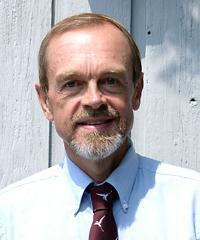
“We know that he gave Aschenbach Mahler's first name, and also his facial features. So Visconti picks up on something interesting. That led me to think about ways of developing further the Aschenbach-Mahler connection.” ThinkingKnowsWayFirstsNamesInterestingPicksConnectionsDevelopingFeaturesFacialSomething InterestingMahlerFacial Features Author:Philip Kitcher
“I didn't know that Mahler would come to play so large a role, nor that music and literature and philosophy can interinanimate one another in the way I've come to think they do in this case.” ThinkingKnowsWayPhilosophyPlayLiteratureRolesCasesMahler Author:Philip Kitcher
“Think about Mann's own daily routine (ascribed to Aschenbach), read the extant diaries and the letters in which he discusses the novella's themes, and it won't be so obvious that the attraction to Tadzio is completely unprecedented; it also won't be obvious that what Aschenbach wants is full sexual contact.” ThinkingWantLettersObviousAttractionContactThemeRoutineDiariesUnprecedentedDaily Routines Author:Philip Kitcher
“Read Mann's notes, which contain precise accounts of cholera and its symptoms, and observe how careful he is throughout his fiction in getting medical details straight - then you might begin to wonder whether cholera is the only candidate for the cause of Aschenbach's death. What results from this, I think, is a deeper appreciation of Mann's brilliance in keeping so many possibilities in play. The ambiguity is even more artful than people have realized.” PeopleThinkingPlayMightCausesResultsFictionWonderPossibilityAccountsNotesDetailsCarefulAppreciationDeeperMedicalCandidatesPreciseSymptomsAmbiguityBrillianceCholera Author:Philip Kitcher
“Most influential of all is the philosopher Stanley Cavell, and a younger generation of philosophers who have attempted to follow his pioneering work in thinking about literature philosophically.” ThinkingLiteratureGenerationsPhilosopherInfluentialStanleyYounger GenerationPioneering Author:Philip Kitcher
“When we read a literary work (or, in some instances, listen to music) our imagination is stimulated, we feel various emotions, and we arrive at new judgments. These attitudes are brought into relation with many others, including our standing tendencies to think and feel in particular ways, and we try to fit our psychological capacities and responses together.” ThinkingWayFeelsTryingTogetherImaginationEmotionAttitudeParticularFitJudgmentCapacityStandingRelationResponseIncludingVariousTendenciesPsychologicalInstanceListening To MusicLiterary Works Author:Philip Kitcher
“I don't think readers of Mann have overlooked the fact that he was a great ironist, but they have tended to see the irony in particular parts of the novella, and to miss it in others.” ThinkingFactsMissingParticularReaderIronyOverlooked Author:Philip Kitcher
“The more you read the novella, the more you should wonder, I think, which judgments are to be taken as bedrock.” ThinkingShouldWonderTakenJudgmentBedrock Author:Philip Kitcher
“I think the tone of mockery Heller finds is a part of Mann's irony, but only a part - a brilliant further touch consists in juxtaposing perspectives so that we're led to wonder whether the mockery itself is the last word.” ThinkingLastsWonderPerspectiveBrilliantIronyToneLast WordsMockery Author:Philip Kitcher
“So is fighting incompleteness the source of artistic neurosis? I doubt it. At most, this would apply to artists who deal with particular kinds of problems. I don't think we should think of Haydn or Mozart or Dickens or George Eliot in these terms.” ThinkingShouldKindProblemArtistFightingTermDealsDoubtParticularSourceArtisticNeurosisDickensEliotIncompleteness Author:Philip Kitcher
“Mann was less interested, I think, in constructing any kind of "portrait of an age" than he was in delineating an individual consciousness in which profound struggles about identity and direction arise - struggles that Mann himself had not only reflected on but felt keenly. Visconti takes up this central focus of the novella, but he couples it with a more social perspective.” ThinkingKindAgeIndividualSocialFeltConsciousnessStruggleFocusIdentityPerspectiveCoupleProfoundArisePortraits Author:Philip Kitcher
“I don't think that anything of any consequence is known a priori: all our knowledge is built up by modifying the lore passed on to us by our ancestors in light of our experiences, and the best a philosopher can do is to learn as much about what has been discovered in various empirical fields, and use it to try to craft an improved synthesis.” ThinkingTryingHas BeensUseLightCan DoKnownFieldsConsequenceBuiltPhilosopherVariousCraftsAncestorSynthesisModifying Author:Philip Kitcher
“A different vision of ethics is that of a collection of resources people can use to act better. The resources might be firm rules that could always be relied on. Or they might be ideals that could often be followed without thinking but that sometimes conflicted with one another.” PeopleThinkingDifferentSometimesUseMightVisionEthicsResourcesIdealsFirmCollectionsOften Is Author:Philip Kitcher
“The point of philosophy, as I see it, is to change thinking, and thereby to change the conversation.” ThinkingPhilosophyConversation Author:Philip Kitcher