Quotessence
Home / Authors / Rebecca Solnit
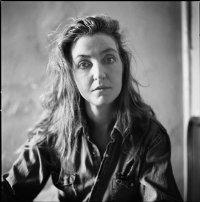
Rebecca Solnit

Rebecca Solnit Quotes

Writer

Filter quotes by topic

Famous Rebecca Solnit Quotes

“As Elizabeth Blackmar and Ray Rosenzweig wrote in their magisterial history of [Central Park in NYC]: 'The issue of demoncratic access to the park has also been raised by the increasing number of homeless New Yorkers. Poor people--from the 'squatters' of the 1850s to the 'tramps' of the 1870s and 1890s to the Hooverville residents of the 1930s--have always turned to the park land for shelter...The growing visibility of homeless people in Central Park osed in the starkest terms the contradiction between Americans' commitment to democratic space and their acquiescence in vast disparities of wealth and power.”

“Feminism has both undone the hierarchy in which the elements aligned with the masculine were given greater value than those of the feminine and undermined the metaphors that aligned these broad aspects of experience with gender. So, there goes women and nature. What does it leave us with? One thing is a political mandate to decentralize privilege and power and equalize access, and that can be a literal spatial goal too, the goal of our designed landscapes and even the managed ones -- the national parks, forests, refuges, recreation areas, and so on.”

“I grew up with landscape as a recourse, with the possibility of exiting the horizontal realm of social relations for a vertical alignment with earth and sky, matter and spirit. Vast open spaces speak best to this craving, the spaces I myself first found in the desert and then in the western grasslands.”

“I think one of the primary goals of a feminist landscape architecture would be to work toward a public landscape in which we can roam the streets at midnight, in which every square is available for Virginia Woolf to make up her novels”

“Perhaps it’s that you can’t go back in time, but you can return to the scenes of a love, of a crime, of happiness, and of a fatal decision; the places are what remain, are what you can possess, are what is immortal. They become the tangible landscape of memory, the places that made you, and in some way you too become them. They are what you can possess and in the end what possesses you.”

“The rhythm of walking generates a kind of rhythm of thinking, and the passage through a landscape echoes or stimulates the passage through a series of thoughts. The creates an odd consonance between internal and external passage, one that suggests that the mind is also a landscape of sorts and that walking is one way to traverse it. A new thought often seems like a feature of the landscape that was there all along, as though thinking were traveling rather than making.”