Quotessence
Home / Authors / Roger E. Olson
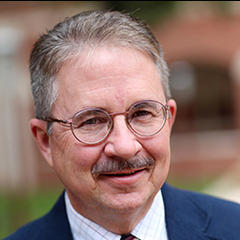
Roger E. Olson

Roger E. Olson Quotes

Professor

Filter quotes by topic

Famous Roger E. Olson Quotes

“Surely we can only come to understand each other's beliefs by means of direct encounter and open, honest discussion. In the meantime, many free churches invite all believers in Jesus Christ to the Table for the sake of true spiritual unity that transcends intellectual differences of interpretation. Withholding sacramental sharing on the basis of disagreement about the nature of the Lord's Supper seems odd to us. What two people think exactly alike about the act? We are not offended by Catholics' closed Communion, but we find it odd and exclusive. It places intellectual understanding above fellowship among disciples of Jesus Christ.”

“Who would believe that a teacher who withholds the information students need to pass a course merely permitted them to fail? What if that teacher said, "I didn't cause them to fail; they did it on their own"? Would anyone accept that explanation or would they accuse the teacher of not merely permitting the students to fail, but actually causing them to fail? And what if the teacher argued that he actually planned and rendered the students' failure certain for a good reason—to uphold academic standards and show what a great teacher he is by demonstrating how necessary his information is for students to pass? Would not these admissions only deepen everyone's conviction that the teacher is morally and professionally wrong?”

“GraceQuest is a gripping story of one man's (and his family's) struggle with tremendous weakness and pain, but it is also a narrative theodicy--defense of God's goodness in spite of the undeniable reality of evil. . . . This is an honest and hard-hitting book about God's grace in and through tremendous loss of health and strength. Readers will find hope and help here if they are open to its message about the God-given 'strength to suffer well.'”

“We, including many Christians, read the Bible through "eyes" conditioned by, and even accommodated to, modern Western culture plus the influences of messages and ideas from other cultures that are alien to the worldview of the biblical writers. Therefore, in order fully to understand the Bible and allow the Bible to absorb the world (rather than the world - culture - absorb the Bible) we must practice an "archaeology" of the biblical writers' implicit, assumed view of reality.”

“"Ultimate reality" is the highest, deepest, eternal, unchangeable, source and ground of everything we see, touch, and experience with our five senses. It's that which gives being and meaning to everything finite, mortal, changeable. It's also that toward which we creatures look and live - whether we know it or not - our telos; our goal and purpose.”

“For Christians ultimate reality is and can only be a personal, sovereign, holy, and loving God. But even some Christians, under extra-biblical and even anti-Christian cultural influences read the Bible as pointing to something not ultimate, such as material wealth, health, happiness, power, etc.”

“The Heidelberg Catechism rightly says, for all Christians who allow the Bible to absorb the world for them - who see reality through the biblical story - that the purpose of life is to glorify God - a personal being who is ultimate over us and everything else - and enjoy him forever. This should be clear to all Christians, but many Christians have been influenced to think otherwise even about the Bible because of dabbling in movements such as the New Age Movement or the Gospel of Health and Wealth or even naturalistic humanism.”

“The Bible portrays God as entering into covenants with people which, when broken, causes him grief and sorrow. The biblical prophet Hosea and God's using him as an illustration of how much Israel's idolatry costs God emotionally points to God's vulnerability. But also the incarnation of God in Jesus Christ who, even as God the Son, suffered for our sins, points to God's vulnerability.”

“There's nothing easy or simple or even entertaining (in our contemporary American sense of that word) in disciplining our minds to "see" reality through biblical lenses; it takes effort and time. But Christians who don't take that effort and time will inevitably succumb to some of the anti-biblical and anti-Christian messages that bombard us every day through advertising, entertainment, etc.”

“Before you disagree make sure you understand. In other words, we must make sure that we can describe another's theological position as he would describe it before we criticize or condemn. Another guiding principle should be 'Do not impute to others beliefs you regard as logically entailed by their beliefs but that they explicitly deny'.”