Quotessence
Home / Authors / Saul Bellow Books
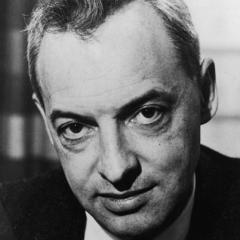
Saul Bellow

Saul Bellow Books

Writer

Herzog

A source page for quotes linked to Saul Bellow.
0 quotes

Seize the Day

A source page for quotes linked to Saul Bellow.

0 quotes

Ravelstein

A source page for quotes linked to Saul Bellow.

0 quotes

DANGLING MAN

A source page for quotes linked to Saul Bellow.

0 quotes

Letters

A source page for quotes linked to Saul Bellow.

0 quotes

The Victim

A source page for quotes linked to Saul Bellow.

0 quotes

Related Quotes

“I might have added, as it entered my mind to do, that some people found satisfaction in being. Being. Others in becoming. Being people have all the breaks. Becoming people are very unlucky, always in a tizzy. The Becoming people are always have to make explanations or offer justifications of the Being people. While the Being people provoke these explanations.”

“Anything that just adds information you can't use is plain dangerous. Anyway, there's too much of everything of this kind, that's come home to me, too much history and culture to keep track of, too many details, too much news, too much example, too much influence, too many guys who tell you to be as they are, and all this hugeness, abundance, turbulence, Niagara Falls torrent. Which who is supposed to interpret? Me? I haven't got that much head to master it all. I get carried away. It doesn't give my feelings enough of a chance if I have to store up and become like an encyclopedia. Why, just as a question of time spent in getting prepared for life, look! a man could spent forty, fifty, sixty years like that inside the walls of his own being. And all high conversation would take place within those walls. And all achievement would stay within those walls. And all glamour too. And even hate, monstrousness, enviousness, murder, would be inside them. This would be only a terrible, hideous dream about existing. It's better to dig ditches and hit other guys with your shovel than die in the walls.”

“A professor from UBC observed that he agreed with Alexander Pope about the ultimate unreality of evil. Seen from the highest point of metaphysics. To a rational mind, nothing bad ever really happens. He was talking high-minded balls. Twaddle! I thought. I said, 'Oh? Do you mean that every gas chamber has a silver lining?”

“I should have written you a letter, it was too late to make the deaths of my brothers an excuse. Since they died, I wrote a book; why not a letter? A mysterious but truthful answer is that while I can gear myself up to do a novel, letters, real-life communications, are too much for me. I used to rattle them off easily enough; why is the challenge of writing to friends and acquaintances too much for me now? Because I have become such a solitary, and not in the Aristotelian sense: not a beast, not a god. Rather, a loner troubled by longings, incapable of finding a suitable language and despairing at the impossibility of composing messages in a playable key--as if I no longer understood the codes used by the estimable people who wanted to hear from me and would have so much to reply if only the impediments were taken away.”

“And this is the unwritten history of man, his unseen, negative accomplishment, his power to do without gratification for himself provided there is something great, something into which his being, and all beings can go. He does not need meaning as long as such intensity has scope. Because then it is self-evident; it is meaning.”

“I might have added, as it entered my mind to do, that some people found satisfaction in being. Being. Others in becoming. Being people have all the breaks. Becoming people are very unlucky, always in a tizzy. The Becoming people are always having to make explanations or offer justifications of the Being people. While the Being people provoke these explanations.”

“And this is what mere humanity always does. It's made up of these inventors or artists, millions and millions of them, each in his own way trying to recruit other people to play a supporting role and sustain him in his make-believe. The great chiefs and leaders recruit the greatest number, and that's what their power is. There's one image that gets out in front to lead the rest and can impose its claim to being genuine with more force than others, or one voice enlarged to thunder is heard above the others. Then a huge invention, which is the invention maybe of the world itself, and of nature, becomes the actual world - with cities, factories, public buildings, railroads, armies, dams, prisons, and movies - becomes the actuality. That’s the struggle of humanity, to recruit others to your version of what’s real. Then even the flowers and the moss on the stones become the moss and the flowers of a version.”

“The challenge of modern freedom, or the combination of isolation and freedom which confronts you, is to make yourself up. The danger is that you may emerge from the process as a not-entirely-human creature.”

“In middle age you no longer thought such thoughts about free choice. Then it came over you that from one grandfather you had inherited such and such a head of hair which looked like honey when it whitens or sugars in the jar; from another, broad thick shoulders; an oddity of speech from one uncle, and small teeth from another, and the gray eyes with darkness diffused even into the whites, and a wide-lipped mouth like a statue from Peru. Wandering races have such looks, the bones of one tribe, the skin of another. From his mother he had gotten sensitive feelings, a soft heart, a brooding nature, a tendency to be confused under pressure.”

“Anyhow, I had found something out about an unknown privation, and I realized how a general love or craving, before it is explicit or before it sees its object, manifests itself as boredom or some other kind of suffering. And what did I think of myself in relation to the great occasions, the more sizable being of these books? Why, I saw them, first of all. So suppose I wasn't created to read a great declaration, or to boss a palatinate, or send off a message to Avignon, and so on, I could see, so there nevertheless was a share for me in all that had happened. How much of a share? Why, I knew there were things that would never, because they could never, come of my reading. But this knowledge was not so different from the remote but ever-present death that sits in the corner of the loving bedroom; though it doesn't budge from the corner, you wouldn't stop your loving. Then neither would I stop my reading. I sat and read. I had no eye, ear, or interest for anything else--that is, for usual, second-order, oatmeal, mere-phenomenal, snarled-shoelace-carfare-laundry-ticket plainness, unspecified dismalness, unknown captivities; the life of despair-harness or the life of organization-habits which is meant to supplant accidents with calm abiding. Well, now, who can really expect the daily facts to go, toil or prisons to go, oatmeal and laundry tickets and the rest, and insist that all moments be raised to the greatest importance, demand that everyone breathe the pointy, star-furnished air at its highest difficulty, abolish all brick, vaultlike rooms, all dreariness, and live like prophets or gods? Why, everybody knows this triumphant life can only be periodic. So there's a schism about it, some saying only this triumphant life is real and others that only the daily facts are. For me there was no debate, and I made speed into the former.”

“The earth was a grave: our life was lent to it by its elements and had to be returned: a time came when the simple elements seemed to long for release from the complicated forms of life, when every element of every cell said, "Enough!" The planet was our mother and our burial ground. No wonder the human spirit wished to leave. Leave this prolific belly. Leave also this great tomb. Passion for the infinite caused by the terror, by timor mortis, needed material appeasement.”

“And everything soon must change. Men would set their watches by other suns than this. Or time would vanish. We would need no personal names of the old sort in the sidereal future, nothing being fixed. We would be designated by other nouns. Days and nights would belong to the museums. The earth a memorial park, a merry-go-round cemetery. The seas powdering our bones like quartz, making sand, grinding our peace for us by the aeon. Well, that would be good - a melancholy good.”

“I thought to do something good by giving an interview to People, which was exceedingly foolish of me. I asked Aaron [Asher] to tell you that the Good Intentions Paving Company had fucked up again. The young interviewer turned my opinions inside out, cut out the praises and made it all sound like disavowal, denunciation and excommunication. Well, we're both used to this kind of thing, and beyond shock. In agreeing to take the call, and make a statement I was simply muddle-headed. But if I had been interviewed by an angel for the Seraphim and Cherubim Weekly I'd have said, as I actually did say to the crooked little slut, that you were one of our very best and most interesting writers. I would have added that I was greatly stimulated and entertained by your last novel, and that of course after three decades I understood perfectly well what you were saying about the writer's trade - how could I not understand, or miss suffering the same pains. Still our diagrams are different, and the briefest description of the differences would be that you seem to have accepted the Freudian explanation: A writer is motivated by his desire for fame, money and sexual opportunities. Whereas I have never taken this trinity of motives seriously. But this is an explanatory note and I don't intend to make a rabbinic occasion of it. Please accept my regrets and apologies, also my best wishes. I'm afraid there's nothing we can do about the journalists; we can only hope that they will die off as the deerflies do towards the end of August.”

“He was looking for the Knight of Faith, the real prodigy. That real prodigy, having set its relations with the infinite, was entirely at home in the finite. Able to carry the jewel of faith, making the motions of the infinite, and as a result needing nothing but the finite and the usual. Whereas others sought the extraordinary in the world. Or wished to be what was gaped at.”

“The writer’s method of attaining the essential was different from that of the thinker or the scientist. These, said Conrad, knew the world by systematic examination. To begin with the artist had only himself; he descended within himself and in the lonely regions to which he descended, he found “the terms of his appeal”. He appealed, said Conrad, “to that part of our being which is a gift, not an acquisition, to the capacity for delight and wonder… our sense of pity and pain, to the latent feeling of fellowship with all creation – and to the subtle but invincible conviction of solidarity that knits together the loneliness of innumerable hearts… which binds together all humanity – the dead to the living and the living to the unborn.”