Quotessence
Home / Authors / Thomas B. Macaulay
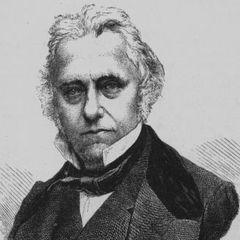
Thomas B. Macaulay

Thomas B. Macaulay Quotes

Former Secretary at War

Filter quotes by topic

Famous Thomas B. Macaulay Quotes

“Our rulers will best promote the improvement of the nation by strictly confining themselves to their own legitimate duties, by leaving capital to find its most lucrative course, commodities their fair price, industry and intelligence their natural reward, idleness and folly their natural punishment, by maintaining peace, by defending property, by diminishing the price of law, and by observing strict economy in every department of the state. Let the Government do this: the People will assuredly do the rest.”

“In the infancy of civilization, when our island was as savage as New Guinea, when letters and arts were still unknown to Athens, when scarcely a thatched roofed hut stood on what was later the site of Rome, this contemned people had their fenced cities and cedar palaces, their splendid Temple, their fleets of merchant ships, their schools of sacred learning, their great statesmen and soldiers, their natural philosophers, their historians and their poets.”

“Many politicians are in the habit of laying it down as a self-evident proposition that no people ought to be free till they are fit to use their freedom. The maxim is worthy of the fool in the old story who resolved not to go into the water till he had learned to swim.”

“Language, the machine of the poet, is best fitted for his purpose in its rudest state. Nations, like individuals, first perceive, and then abstract. They advance from particular images to general terms. Hence the vocabulary of an enlightened society is philosophical, that of a half-civilized people is poetical.”

“History, is made up of the bad actions of extraordinary men and woman. All the most noted destroyers and deceivers of our species, all the founders of arbitrary governments and false religions have been extraordinary people; and nine tenths of the calamities that have befallen the human race had no other origin than the union of high intelligence with low desires.”