Source: Dancing at the Edge of the World: Thoughts on Words, Women, Places
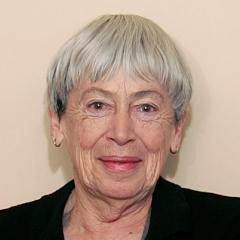
Filter quotes by topic
Famous Ursula K. Le Guin Quotes
“Distrust everything I say. I am telling the truth.”
Source: The Language of the Night: Essays on Fantasy and Science Fiction
Source: Words Are My Matter: Writings About Life and Books, 2000-2016, with a Journal of a WriterÕs Week
“Sanity returns (in most cases) when the book is closed.”
Source: The Left Hand of Darkness
“One voice speaking truth is a greater force than fleets and armies.”
Source: The Left Hand of Darkness
“If civilization has an opposite, it is war.”
Source: The Left Hand of Darkness
Source: The Left Hand of Darkness
Source: A Wizard of Earthsea
Source: A Wizard of Earthsea
“Other people's stories may become part of your own, the foundation of it, the ground it goes on.”
Source: Gifts
Source: The Language of the Night: Essays on Fantasy and Science Fiction
Source: The farthest shore
Source: The farthest shore
“They can send death at once, but life is slower.”
Source: Three Hainish Novels
“Excess is excrement, ... Excrement retained in the body is a poison.”
Source: The Dispossessed
“Sometimes you must go against the wheel's turn.”
Source: The Left Hand of Darkness
“To hear, one must be silent.”
Source: A Wizard of Earthsea
Source: The Unreal and the Real: The Selected Short Stories of Ursula K. Le Guin
Source: The Dispossessed
“I am no more lonely than the loon on the pond that laughs so loud.”
Source: Three Hainish Novels
Source: The farthest shore
Source: The farthest shore
Source: The farthest shore
Source: The farthest shore
“She'll die.' 'Aye. That's a consequence of being alive.”
Source: The farthest shore
“But it doesn't take a thousand men to open a door, my lord." "It might to keep it open.”
Source: The Left Hand of Darkness
Source: A Wizard of Earthsea
“Living, being in the world, was a much greater and stranger thing than she had ever dreamed.”
Source: The Tombs of Atuan
Source: The Language of the Night: Essays on Fantasy and Science Fiction
“But need alone is not enough to set power free: there must be knowledge.”
Source: A Wizard of Earthsea
Source: A Wizard of Earthsea
Source: A Wizard of Earthsea
“The story is not in the plot but in the telling.”
Source: Steering the Craft: A Twenty-First-Century Guide to Sailing the Sea of Story
Source: The Left Hand of Darkness
Source: Very Far Away from Anywhere Else