Quotessence
Home / Authors / Walter Pater
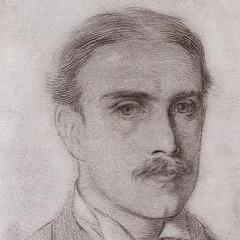
Walter Pater

Walter Pater Quotes

Critic

Filter quotes by topic

Famous Walter Pater Quotes

“All art constantly aspires towards the condition of music. For while in all other kinds of art it is possible to distinguish the matter from the form, and the understanding can always make this distinction, yet it is the constant effort of art to obliterate it. That the mere matter of a poem, for instance, its subject, namely, its given incidents or situation—that the mere matter of a picture, the actual circumstances of an event, the actual topography of a landscape—should be nothing without the form, the spirit, of the handling, that this form, this mode of handling, should become an end in itself, should penetrate every part of the matter: this is what all art constantly strives after, and achieves in different degrees.”

“What modern art has to do in the service of culture is so to rearrange the details of modern life, so to reflect it, that it may satisfy the spirit. And what does the spirit need in the face of modern life? The sense of freedom. That naive, rough sense of freedom, which supposes man's will to be limited, if at all, only by a will stronger than his, he can never have again. The attempt to represent it in art would have so little verisimilitude that it would be flat and uninteresting. The chief factor in the thoughts of the modern mind concerning itself is the intricacy, the universality of natural law, even in the moral order. For us, necessity is not, as of old, a sort of mythological personage without us, with whom we can do warfare: it is a magic web woven through and through us, like that magnetic system of which modern science speaks, penetrating us with a network, subtler than our subtlest nerves, yet bearing in it the central forces of the world. Can art represent men and women in these bewildering toils so as to give the spirit at least an equivalent for the sense of freedom? Certainly, in Goethe's romances, and even more in the romances of Victor Hugo, there are high examples of modern art dealing thus with modern life, regarding that life as the modern mind must regard it, yet reflecting upon blitheness and repose. Natural laws we shall never modify, embarrass us as they may; but there is still something in the nobler or less noble attitude with which we watch their fatal combinations. In those romances of Goethe and Victor Hugo, in some excellent work done after them, this entanglement, this network of law, becomes the tragic situation, in which certain groups of noble men and women work out for themselves a supreme Denouement. Who, if he saw through all, would fret against the chain of circumstance which endows one at the end with those great experiences?”

“Possessed of an absolute belief that there exists but one way of expressing one thing, one word to call it by, one adjective to qualify, one verb to animate it, he [Flaubert] gave himself to superhuman labour for the discovery, in every phrase, of that word, that verb, that epithet. In this way, he believed in some mysterious harmony of expression, and when a true word seemed to him to lack euphony still went on seeking another, with invincible patience, certain that he had not yet got hold of the unique word.... A thousand preoccupations would beset him at the same moment, always with this desperate certitude fixed in his spirit: Among all the expressions in the world, all forms and turns of expression, there is but one—one form, one mode—to express what I want to say.”

“As in living creatures, the blood, nourishing the body, determines its very contour and external aspect, just so, to his mind, the matter, the basis, in a work of art, imposed, necessarily, the unique, the just expression, the measure, the rhythm—the form in all its characteristics. If the style be the man, in all the colour and intensity of a veritable apprehension, it will be in a real sense "impersonal.”

“The essence of humanism is that belief of which he seems never to have doubted, that nothing which has ever interested living men and women can wholly lose its vitality—no language they have spoken, nor oracle beside which they have hushed their voices, no dream which has once been entertained by actual human minds, nothing about which they have ever been passionate, or expended time and zeal.”

“For the essence of humanism is that belief of which he seems never to have doubted, that nothing which has ever interested living men and women can wholly lose its vitality—no language they have spoken, nor oracle beside which they have hushed their voices, no dream which has once been entertained by actual human minds, nothing about which they have ever been passionate, or expended time and zeal.”

“That the mere matter of a poem, for instance--its subject, its given incidents or situation; that the mere matter of a picture--the actual circumstances of an event, the actual topography of a landscape--should be nothing without the form, the spirit of the handling, that this form, this mode of handling, should become an end in itself, should penetrate every part of the matter;Mthis is what all art constantly strives after, and achieves in different degrees.”