Quotessence
Home / Quotes / Quote by Walter Pater

Quote by Walter Pater

“For the essence of humanism is that belief of which he seems never to have doubted, that nothing which has ever interested living men and women can wholly lose its vitality—no language they have spoken, nor oracle beside which they have hushed their voices, no dream which has once been entertained by actual human minds, nothing about which they have ever been passionate, or expended time and zeal.”

Quote by Walter Pater

Work

Author

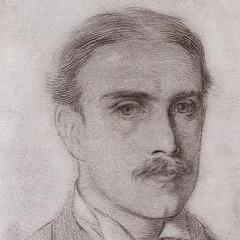
Walter Pater
Walter Pater

Walter Pater was a British essayist, critic, and poet, known for his influential literary criticism and contributions to the Aesthetic Movement. Born on August 4, 1839, and died on July 30, 1894, Pater's work had a significant impact on the development of modern literary theory and the appreciation of art and literature. more

You May Also Like

“...but it was not until Sebastian idly turning the page of Clive Bell's Art, read: '“Does anyone feel the same kind of emotion for a butterfly or a flower that he feels for a cathedral or a picture?” Yes. I do,' that my eyes were opened.”

“The most important of these things is that art challenges orthodoxy. To reject or vilify art because it does that is to fail to understand its nature. Art sets the artist’s passionate personal vision against the received ideas of its time. Art knows that received ideas are the enemies of art, as Flaubert told us in Bouvard and Pécuchet. Clichés are received ideas and so are ideologies, both those which depend on the sanction of invisible sky gods and those which do not. Without art, our ability to think, to see freshly, and to renew our world would wither and die.Art is not a luxury. It stands at the essence of our humanity, and it asks for no special protection except the right to exist.It accepts argument, criticism, even rejection. It does not accept violence.And in the end, it outlasts those who oppress it. The poet Ovid was exiled by Augustus Caesar, but the poetry of Ovid has outlasted the Roman Empire. The poet Mandelstam’s life was ruined by Joseph Stalin, but his poetry has outlasted the Soviet Union. The poet Lorca was murdered by the thugs of General Franco, but his art has outlasted the fascism of the Falange.”

“I feel that the cartoon should involve something happening that could not possibly happen, but which has a kind of truth to it. There should be a give-and-take between the truth and the implausibility. If those two things are going on at the exact same time, and they’re both equal in weight, then the brain has a conflict that it has to resolve, and it can only resolve it through laughter.”

“There is some confusion as to what magic actually is. I think this can be cleared up. If you just look at the very earliest descriptions of magic. Magic in its earliest form is often referred to as "the art". I believe that this is completely literal, I believe that magic is art and that art, whether that'd be writing, music, sculpture or any other form is literally magic. Art is, like magic, the science of manipulating symbols, words or images to achieve changes in consciousness. The very language of magic seems to be talking as much about writing or art as it is about supernatural events. A grimoire for example, the book of spells is simply a fancy way of saying grammar. Indeed, to cast a spell is simply to spell, to manipulate words, to change people's consciousness. And I believe this is why an artist or writer is the closest thing in the contemporary world that you are likely to see to a shaman. I believe all culture must have arisen from cult. Originally, all of the facets of our culture, whether they'd be in the arts or the sciences were the province of the shaman. The fact that in present times, this magical power has degenerated to the level of cheap entertainment and manipulation is I think a tragedy.”