Quotessence
Home / Authors / William Graham Sumner
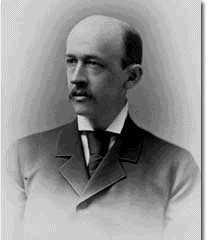
William Graham Sumner

William Graham Sumner Quotes

Political scientist

Filter quotes by topic

Famous William Graham Sumner Quotes

“Everywhere you go on the continent of Europe at this hour you see the conflict between militarism and industrialism. You see the expansion of industrial power pushed forward by the energy, hope, and thrift of men, and you see the development arrested, diverted, crippled, and defeated by measures which are dictated by military considerations.”

“The Forgotten Man... works, he votes, generally he prays-but he always pays-yes, above all, he pays. He does not want an office; his name never gets into the newspaper except when he gets married or dies. He keeps production going on.... He does not frequent the grocery or talk politics at the tavern. Consequently, he is forgotten.... All the burdens fall on him, or on her, for it is time to remember that the Forgotten Man is not seldom a woman.”

“The class distinctions simply result from the different degrees of success with which men have availed themselves of the chances which were presented to them. Instead of endeavoring to redistribute the acquisitions which have been made between the existing classes, our aim should be to increase, multiply, and extend the chances.”

“If any student of social science comes to appreciate the case of the Forgotten Man, he will become an unflinching advocate of strict scientific thinking in sociology, and a hard-hearted skeptic as regards any scheme of social amelioration. He will always want to know, Who and where is the Forgotten Man in this case, who will have to pay for it all?”

“In the New Testament it is taught that willing and voluntary service to others is the highest duty and glory in human life. . . . The men of talent are constantly forced to serve the rest. They make the discoveries and inventions, order the battles, write the books, and produce the works of art. The benefit and enjoyment go to the whole. There are those who joyfully order their own lives so that they may serve the welfare of mankind.”

“The type and formula of most schemes of philanthropy or humanitarianism is this: A and B put their heads together to decide what C shall be made to do for D. The radical vice of all these schemes, from a sociological point of view, is that C is not allowed a voice in the matter, and his position, character, and interests, as well as the ultimate effects on society through C's interests, are entirely overlooked. I call C the Forgotten Man.”

“The Forgotten Man is delving away in patient industry, supporting his family, paying his taxes, casting his vote, supporting the church and the school, reading his newspaper, and cheering for the politician of his admiration, but he is the only one for whom there is no provision in the great scramble and the big divide. Such is the Forgotten Man. He works, he votes, generally he prays — but he always pays — yes, above all, he pays.”

“Every man and woman in society has one big duty. That is, to take care of his or her own self. This is a social duty. For, fortunately, the matter stands so that the duty of making the best of one's self individually is not a separate thing from the duty of filling one's place in society, but the two are one, and the latter is accomplished when the former is done”

“Whatever capital you divert to the support of a shiftless and good-for-nothing person is so much diverted from some other employment, and that means from somebody else. I would spend any conceivable amount of zeal and eloquence if I possessed it to try to make people grasp this idea. Capital is force. If it goes one way it cannot go another. If you give a loaf to a pauper you cannot give the same loaf to a laborer. Now this other man who would have got it but for the charitable sentiment which bestowed it on a worthless member of society is the Forgotten Man.”