Quotessence
Home / Quotes / Quote by Arthur Schopenhauer

Quote by Arthur Schopenhauer

“It would be better if there were nothing. Since there is more pain than pleasure on earth, every satisfaction is only transitory, creating new desires and new distresses, and the agony of the devoured animal is always far greater than the pleasure of the devourer”

Quote by Arthur Schopenhauer

Work

101 Facts of life

This book delves into a wide range of topics, providing an engaging and educational exploration of life's many facets. It is designed to be both informative and accessible, offering a wealth of facts that can be enjoyed by individuals seeking to broaden their knowledge on a variety of subjects. more

Author

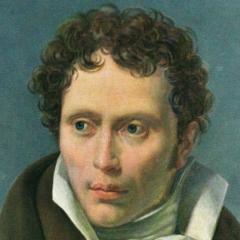
Arthur Schopenhauer
Arthur Schopenhauer

Arthur Schopenhauer was a prominent German philosopher born on February 22, 1788, and died on September 21, 1860. He is one of the most important figures in 19th-century German philosophy and is known for his unique pessimistic philosophical ideas. more

You May Also Like

“She bent her finger and then straightened it. The mystery was in the instant before it moved, the dividing moment between not moving and moving, when her intention took effect. It was like a wave breaking. If she could only find herself at the crest, she thought, she might find the secret of herself, that part of her that was really in charge. She brought her forefinger closer to her face and stared at it, urging it to move. It remained still because she was pretending... . And when she did crook it finally, the action seemed to start in the finger itself, not in some part of her mind.”

“[A] process was going on in which people were transformed into things, into pieces of reality which pure science can calculate and technical science can control. … [T]he safety which is guaranteed by well-functioning mechanisms for the technical control of nature, by the refined psychological control of the person, by the rapidly increasing organizational control of society – this safety is bought at a high price: man, for whom all this was invented as a means, becomes a means himself in the service of means.”