Quotessence
Home / Quotes / Quote by Ian Mcewan

Quote by Ian Mcewan

“She bent her finger and then straightened it. The mystery was in the instant before it moved, the dividing moment between not moving and moving, when her intention took effect. It was like a wave breaking. If she could only find herself at the crest, she thought, she might find the secret of herself, that part of her that was really in charge. She brought her forefinger closer to her face and stared at it, urging it to move. It remained still because she was pretending... . And when she did crook it finally, the action seemed to start in the finger itself, not in some part of her mind.”

Quote by Ian Mcewan

Author
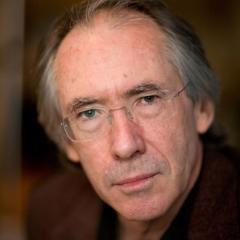
Ian Mcewan
Ian Mcewan

Ian Mcewan is a renowned British novelist known for his unique narrative techniques and profound insights into human nature. His works often explore themes such as moral dilemmas, historical events, and personal identity. Born on June 21, 1948, Mcewan's representative works include 'Atonement', 'Freedom', and 'Amsterdam'. more

You May Also Like

“[A] process was going on in which people were transformed into things, into pieces of reality which pure science can calculate and technical science can control. … [T]he safety which is guaranteed by well-functioning mechanisms for the technical control of nature, by the refined psychological control of the person, by the rapidly increasing organizational control of society – this safety is bought at a high price: man, for whom all this was invented as a means, becomes a means himself in the service of means.”

“I do not at all believe in human freedom in the philosophical sense... Schopenhauer’s saying, ‘A man can do what he wants, but not will what he wants,’ has been a very real inspiration to me since my youth; it has been a continual consolation in the face of life’s hardships, my own and others’, and an unfailing wellspring of tolerance. This realization mercifully mitigates the easily paralyzing sense of responsibility and prevents us from taking ourselves and other people too seriously; it is conducive to a view of life which, in part, gives humour its due.”

“We laugh at a man who, stepping out of his room at the very minute when the sun is rising, says, “It is my will that the sun shall rise”; or at him who, unable to stop a wheel, says, “I wish it to roll”; or, again, at him who, thrown in a wrestling match, says, “Here I lie, but here I wish to lie.” But, joking apart, do we not act like one of these three persons whenever we use the expression “I wish”?”

“Man is an onion made up of a hundred integuments, a texture made up of many threads. The ancient Asiatics knew this well enough, and in the Buddhist Yoga an exact technique was devised for unmasking the illusion of the personality. The human merry-go-round sees many changes: the illusion that cost India the efforts of thousands of years to unmask is the same illusion that the West has labored just as hard to maintain and strengthen.”