“The requirement of conspicuous wastefulness is... present as a constraining norm selectively shaping and sustaining our sense of what is beautiful.”
Quote by Thorstein Veblen
Work
A Veblen Treasury: From Leisure Class to War, Peace, and Capitalism
Drawing from Veblen's foundational work on the theory of the leisure class, this collection delves into the critical analysis of how conspicuous consumption and status-seeking behaviors shape economic systems. The book examines Veblen's perspectives on the relationship between industrial production and financial interests, particularly his observations about how business enterprises pursue profit maximization through practices that may not align with broader social welfare. The analysis extends to Veblen's insights on the role of price-setting and the tension between making goods and making money, exploring how these dynamics influence economic stability and conflict. Throughout the work, Veblen's critique of the capitalist system and its inherent contradictions provides a framework for understanding broader economic behaviors and their social implications. more
Author
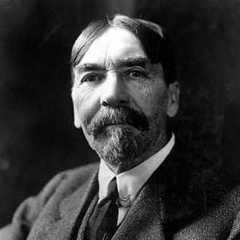
Thorstein Veblen
Thorstein Veblen was an American economist known for his sociological perspective on economics and his critical analysis of economic theories. His work, 'The Theory of the Leisure Class,' had a profound impact on later economics and sociology. more
You May Also Like
Source: The Theory of the Leisure Class
Source: The Theory of the Leisure Class
Source: A Veblen Treasury: From Leisure Class to War, Peace, and Capitalism
Source: The Theory of the Leisure Class
Source: The Complete Stories of Paul Laurence Dunbar