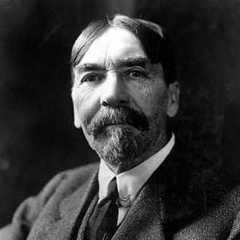
“...the traits that distinguish the swaggering delinquent and the punctilious gentleman of leisure from the common crowd are, in some measure, marks of an arrested spiritual development. They mark an immature phase, as compared with the stage of development attained by the average adults in the modern industrial community.”
Source: Conspicuous Consumption
“The effect of the pecuniary interest and the pecuniary habit of mind upon the growth of institutions is seen in those enactments and conventions that make for security of property, enforcement of contracts, facility of pecuniary transactions, vested interests. Of such bearing are changes affecting bankruptcy and receiverships, limited liability, banking and currency, coalitions of labourers or employers, trusts and pools. The community's institutional furniture of this kind is of immediate consequence only to the propertied classes, and in proportion as they are propertied; that is to say, in proportion as they are to be ranked with the leisure class. But indirectly these conventions of business life are of the gravest consequence for the industrial process and for the life of the community. And in guiding the institutional growth in this respect, the pecuniary classes, therefore, serve a purpose of the most serious importance to the community, not only in the conservation of the accepted social scheme, but also in shaping the industrial process proper.
The immediate end of this pecuniary institutional structure and of its amelioration is the greater facility of peaceable and orderly exploitation; but its remoter effects far outrun this immediate object. Not only does the more facile conduct of business permit industry and extra-industrial life to go on with less perturbation; but the resulting elimination of disturbances and complications calling for an exercise of astute discrimination in everyday affairs acts to make the pecuniary class itself superfluous. As fact as pecuniary transactions are reduced to routine, the captain of industry can be dispensed with. This consummation, it is needless to say, lies yet in the indefinite future. The ameliorations wrought in favour of the pecuniary interest in modern institutions tend, in another field, to substitute the 'soulless' joint-stock corporation for the captain, and so they make also for the dispensability of the great leisure-class function of ownership. Indirectly, therefore, the bent given to the growth of economic institutions by the leisure-class influence is of very considerable industrial consequence.”
Source: The Theory of the Leisure Class
“The ideal pecuniary [financial] man is like the ideal delinquent in his unscrupulous conversion of goods and persons to his own ends, and in a callous disregard of the feelings and wishes of others and of the remoter effects of his actions; but he is unlike him in possessing a keener sense of status, and in working more consistently and far-sightedly to a remoter end.”
Source: Conspicuous Consumption
“The walking stick serves the purpose of an advertisement that the bearer's hands are employed otherwise than in useful effort, and it therefore has utility as an evidence of leisure.”
Source: Theory of the Leisure Class
“As a matter of selective necessity, man is an agent. He is, in his own apprehension, a centre of unfolding impulsive activity-'teleological activity.' He is an agent seeking in every act the accomplishment of some concrete, objective, impersonal end. By force of being such an agent, he is possessed of a taste for effective work, and a distaste for futile effort.”
Source: THORSTEIN VEBLEN Ultimate Collection: 8 Books & 50+ Business Essays and Articles in Warfare and Economics: The Theory of the Leisure Class, The Theory of Business Enterprise, The Higher Learning In America, Panem et Circenses, The Vested Interests and the Common Man, The Use of Loan Credit in Business…
“Beauty is commonly a gratification of our sense of costliness masquerading under the name of beauty.”
Source: BUSINESS & ECONOMICS Premium Collection: 25+ Titles in One Volume: The Theory of Business Enterprise, The Higher Learning in America, The Vested Interests and the Common Man, On the Nature of Capital…: The Theory of the Leisure Class, The Beginning of Ownership, The Preconceptions of Economic Science, The Industrial System and the Captains of Industry, The Socialist Economics of Karl Marx…
“The superior excellence imputed to the book, which imitates the products of antique and obsolete processes, is conceived to be chiefly a superior utility in the aesthetic respect; but it is not unusual to find a well-bred book-lover insisting that the clumsier product is also more serviceable as a vehicle of printed speech.”
Source: A Veblen Treasury: From Leisure Class to War, Peace, and Capitalism
“The changing styles are the expression of a restless search for something which shall commend itself to our aesthetic sense; but as each innovation is subject to the selective action of the norm of conspicuous waste, the range within which innovation can take place is somewhat restricted. The innovation must not only be more beautiful, or perhaps oftener less offensive, than that which it displaces, but it must also come up to the accepted standard of expensiveness.”
Source: A Veblen Treasury: From Leisure Class to War, Peace, and Capitalism
“These various habits of thought, or habitual expressions of life, are all phases of the single life sequence of the individual; therefore a habit formed in response to a given stimulus will necessarily affect the character of the response made to other stimuli. A modification of human nature at any one point is a modification of human nature as a whole.”
Source: BUSINESS & ECONOMICS Premium Collection: 25+ Titles in One Volume: The Theory of Business Enterprise, The Higher Learning in America, The Vested Interests and the Common Man, On the Nature of Capital…: The Theory of the Leisure Class, The Beginning of Ownership, The Preconceptions of Economic Science, The Industrial System and the Captains of Industry, The Socialist Economics of Karl Marx…
“Inherited aptitudes and traits of temperament count for quite as much as length of habituation in deciding what range of habits will come to dominate any individual's scheme of life.”
Source: A Veblen Treasury: From Leisure Class to War, Peace, and Capitalism
“The aesthetic serviceability of objects of beauty is not greatly nor universally heightened by possession.”
Source: A Veblen Treasury: From Leisure Class to War, Peace, and Capitalism
“The individual's habits of thought make an organic complex, the trend of which is necessarily in the direction of serviceability to the life process. When it is attempted to assimilate systematic waste or futility, as an end in life, into this organic complex, there presently supervenes a revulsion.”
Source: The Theory of the Leisure Class
“Conservatism is the maintenance of conventions already in force.”
Source: BUSINESS & ECONOMICS Premium Collection: 25+ Titles in One Volume: The Theory of Business Enterprise, The Higher Learning in America, The Vested Interests and the Common Man, On the Nature of Capital…: The Theory of the Leisure Class, The Beginning of Ownership, The Preconceptions of Economic Science, The Industrial System and the Captains of Industry, The Socialist Economics of Karl Marx…
“The early ascendancy of leisure as a means of reputability is traceable to the archaic distinction between noble and ignoble employments. Leisure is honourable and becomes imperative partly because it shows exemption from ignoble labour.”
Source: The Theory of the Leisure Class
“The corset is?a mutilation, undergone for the purpose of lowering the subject's vitalityand rendering her permanentlyand obviously unfit for work.”
“It is a matter of course and of absolute necessity to the conduct of business, that any discretionary businessman must be free to deal or not to deal in any given case; to limit or withhold the equipment under his control, without reservation. Business discretion and business strategy, in fact, has no other means by to work out its aims. So that, in effect, all business sagacity reduces itself in the last analysis to judicious use of sabotage.”
Source: The Nature of Peace
“The institution of a leisure class has emerged gradually during the transition from primitive savagery to barbarism; or more precisely, during the transition from a peaceable to a consistently warlike habit of life.”
Source: THE THEORY OF THE LEISURE CLASS: An Economic Study of American Institutions and a Social Critique of Conspicuous Consumption: Development of Institutions That Shape Society and Influence the Livelihood of Citizens: Based on Sociological & Economical Theories of Charles Darwin, Karl Marx, Adam Smith and Herbert Spencer
“From the ownership of women the concept of ownership extends itself to include the products of their industry, and so there arises the ownership of things as well as of persons.”
Source: THE THEORY OF THE LEISURE CLASS: An Economic Study of American Institutions and a Social Critique of Conspicuous Consumption: Development of Institutions That Shape Society and Influence the Livelihood of Citizens: Based on Sociological & Economical Theories of Charles Darwin, Karl Marx, Adam Smith and Herbert Spencer
“The possession of wealth confers honor; it is an invidious distinction.”
Source: A Veblen Treasury: From Leisure Class to War, Peace, and Capitalism
“While the proximate ground of discrimination may be of another kind, still the pervading principle and abiding test of good breeding is the requirement of a substantial and patent waste of time.”
Source: A Veblen Treasury: From Leisure Class to War, Peace, and Capitalism
“The chief use of servants is the evidence they afford of the master's ability to pay.”
Source: THORSTEIN VEBLEN Ultimate Collection: 8 Books & 50+ Business Essays and Articles in Warfare and Economics: The Theory of the Leisure Class, The Theory of Business Enterprise, The Higher Learning In America, Panem et Circenses, The Vested Interests and the Common Man, The Use of Loan Credit in Business…
“It frequently happens that an element of the standard of living which set out with being primarily wasteful, ends with becoming, in the apprehension of the consumer, a necessary of life.”
Source: A Veblen Treasury: From Leisure Class to War, Peace, and Capitalism
“It is much more difficult to recede from a scale of expenditure once adopted than it is to extend the accustomed scale in response to an accession of wealth.”
Source: BUSINESS & ECONOMICS Premium Collection: 25+ Titles in One Volume: The Theory of Business Enterprise, The Higher Learning in America, The Vested Interests and the Common Man, On the Nature of Capital…: The Theory of the Leisure Class, The Beginning of Ownership, The Preconceptions of Economic Science, The Industrial System and the Captains of Industry, The Socialist Economics of Karl Marx…
“In the rare cases where it occurs, a failure to increase one's visible consumption when the means for an increase are at hand is felt in popular apprehension to call for explanation, and unworthy motives of miserliness are imputed.”
Source: BUSINESS & ECONOMICS Premium Collection: 25+ Titles in One Volume: The Theory of Business Enterprise, The Higher Learning in America, The Vested Interests and the Common Man, On the Nature of Capital…: The Theory of the Leisure Class, The Beginning of Ownership, The Preconceptions of Economic Science, The Industrial System and the Captains of Industry, The Socialist Economics of Karl Marx…
“A standard of living is of the nature of habit. ...it acts almost solely to prevent recession from a scale of conspicuous expenditure that has once become habitual.”
Source: THE THEORY OF THE LEISURE CLASS: An Economic Study of American Institutions and a Social Critique of Conspicuous Consumption: Development of Institutions That Shape Society and Influence the Livelihood of Citizens: Based on Sociological & Economical Theories of Charles Darwin, Karl Marx, Adam Smith and Herbert Spencer
“The domestic life of most classes is relatively shabby, as compared with the éclat of that overt portion of their life that is carried on before the eyes of observers.”
Source: The Theory of the Leisure Class
“The thief or swindler who has gained great wealth by his delinquency has a better chance than the small thief of escaping the rigorous penalty of the law.”
Source: A Veblen Treasury: From Leisure Class to War, Peace, and Capitalism
“The requirement of conspicuous wastefulness is... present as a constraining norm selectively shaping and sustaining our sense of what is beautiful.”
Source: A Veblen Treasury: From Leisure Class to War, Peace, and Capitalism
“The office of the leisure class in social evolution is to retard the movement and to conserve what is obsolescent. This proposition is by no means novel; it has long been one of the commonplaces of popular opinion.”
Source: The Theory of the Leisure Class
“The taste of the more recent accessions to the leisure class proper and of the middle and lower classes still requires a pecuniary beauty to supplement the aesthetic beauty, even in those objects which are primarily admired for the beauty that belongs to them as natural growths.”
Source: The Theory of the Leisure Class
“In aesthetic theory it might be extremely difficult, if not quite impracticable, to draw a line between the canon of classicism, or regard for the archaic, and the canon of beauty.”
Source: A Veblen Treasury: From Leisure Class to War, Peace, and Capitalism
“Conservatism, being an upper-class characteristic, is decorous; and conversely, innovation, being a lower-class phenomenon, is vulgar. ...Innovation is bad form.”
Source: The Theory of the Leisure Class
“Socialism is a dead horse.”
Source: The Complete Works of Thorstein Veblen: Economics Books, Business Essays & Political Articles: The Theory of the Leisure Class, The Theory of Business Enterprise, The Higher Learning In America, The Use of Loan Credit in Business…
“The first duty of an editor is to gauge the sentiment of his reader, and then to tell them what they like to believe.”
Source: THE THEORY OF BUSINESS ENTERPRISE (Nature, Causes, Utility & Drift of Business Enterprise): A Political Economy Book
“The machine technology takes no cognizance of conventionally established rules of precedence; it knows neither manners nor breeding and can make no use of any of the attributes of worth.”
Source: The Theory of Business Enterprise
“Instead of investing in the goods as they pass between producer and consumer, as the merchant does, the businessman now invests in the processes of industry.”
Source: BUSINESS & ECONOMICS Premium Collection: 25+ Titles in One Volume: The Theory of Business Enterprise, The Higher Learning in America, The Vested Interests and the Common Man, On the Nature of Capital…: The Theory of the Leisure Class, The Beginning of Ownership, The Preconceptions of Economic Science, The Industrial System and the Captains of Industry, The Socialist Economics of Karl Marx…
“Into the cultural and technological system of the modern world, the patriotic spirit fits like dust in the eyes and sand in the bearings. Its net contribution to the outcome is obscuration, distrust, and retardation at every point where it touches the fortunes of modern mankind.”
Source: An Inquiry Into the Nature of Peace, and the Terms of Its Perpetuation
“Abstention from labor is the conventional evidence of wealth and is therefore the conventional mark of social standing.”
Source: A Veblen Treasury: From Leisure Class to War, Peace, and Capitalism
“The addiction to sports, therefore, in a peculiar degree marks an arrested development in man's moral nature.”
Source: BUSINESS & ECONOMICS Premium Collection: 25+ Titles in One Volume: The Theory of Business Enterprise, The Higher Learning in America, The Vested Interests and the Common Man, On the Nature of Capital…: The Theory of the Leisure Class, The Beginning of Ownership, The Preconceptions of Economic Science, The Industrial System and the Captains of Industry, The Socialist Economics of Karl Marx…
“Labor wants pride and joy in doing good work, a sense of making or doing something beautiful or useful - to be treated with dignity and respect as brother and sister.”
“Born in iniquity and conceived in sin, the spirit of nationalism has never ceased to bend human institutions to the service of dissension and distress.”
Source: Absentee Ownership: Business Enterprise in Recent Times : the Case of America
“Only individuals with an aberrant temperament can in the long run retain their self-esteem in the face of the disesteem of their fellows.”
Source: The Theory of the Leisure Class
“In order to stand well in the eyes of the community, it is necessary to come up to a certain, somewhat indefinite, conventional standard of wealth.”
Source: The Theory of the Leisure Class
“Loud dress becomes offensive to people of taste, as evincing an undue desire to reach and impress the untrained sensibilities of the vulgar.”
Source: THE THEORY OF THE LEISURE CLASS: An Economic Study of American Institutions and a Social Critique of Conspicuous Consumption: Development of Institutions That Shape Society and Influence the Livelihood of Citizens: Based on Sociological & Economical Theories of Charles Darwin, Karl Marx, Adam Smith and Herbert Spencer
“With the exception of the instinct of self-preservation, the propensity for emulation is probably the strongest and most alert and persistent of the economic motives proper.”
“The visible imperfections of hand-wrought goods, being honorific, are accounted marks of superiority in point of beauty, or serviceability, or both.”
Source: The Theory of the Leisure Class
“There are few things that so touch us with instinctive revulsion as a breach of decorum.”
Source: THE THEORY OF THE LEISURE CLASS: An Economic Study of American Institutions and a Social Critique of Conspicuous Consumption: Development of Institutions That Shape Society and Influence the Livelihood of Citizens: Based on Sociological & Economical Theories of Charles Darwin, Karl Marx, Adam Smith and Herbert Spencer
“Invention is the mother of necessity.”
Source: Absentee Ownership: Business Enterprise in Recent Times : the Case of America
“In itself and in its consequences the life of leisure is beautiful and ennobling in all civilised men's eyes.”
Source: THE THEORY OF THE LEISURE CLASS: An Economic Study of American Institutions and a Social Critique of Conspicuous Consumption: Development of Institutions That Shape Society and Influence the Livelihood of Citizens: Based on Sociological & Economical Theories of Charles Darwin, Karl Marx, Adam Smith and Herbert Spencer
“The quasi-peaceable gentleman of leisure, then, not only consumes of the staff of life beyond the minimum required for subsistence and physical efficiency, but his consumption also undergoes a specialisation as regards the quality of the goods consumed. He consumes freely and of the best, in food, drink, narcotics, shelter, services, ornaments, apparel, weapons and accoutrements, amusements, amulets, and idols or divinities.”
Source: THE THEORY OF THE LEISURE CLASS: An Economic Study of American Institutions and a Social Critique of Conspicuous Consumption: Development of Institutions That Shape Society and Influence the Livelihood of Citizens: Based on Sociological & Economical Theories of Charles Darwin, Karl Marx, Adam Smith and Herbert Spencer