Quotessence
Home / Quotes / Quote by Philip Zimbardo

Quote by Philip Zimbardo

Work

The Time Paradox: The New Psychology of Time That Will Change Your Life

This book examines the concept of time perspective, the often-unconscious process by which people divide their experiences into past, present, and future time frames. It discusses how these temporal orientations shape habits, relationships, and life outcomes, drawing on research from psychology and neuroscience. The authors present a framework for understanding different time attitudes and offer insights into how adjusting one's time perspective can lead to more fulfilling and effective living. The work emphasizes that time is not just a physical dimension but a psychological force that can be harnessed for personal change. more

Author
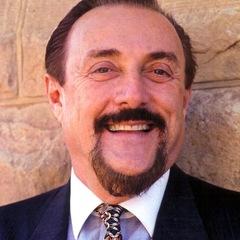
Philip Zimbardo
Philip Zimbardo

Philip Zimbardo is a renowned psychologist, known for his groundbreaking research in prison experiments and personality psychology. His work has revealed the complexity of human behavior and the impact of social environments on individual actions. more

You May Also Like

“We want to believe we are good, we are different, we are better, or we are superior. But this body of social-psychological research--and there are obviously many more experiments in addition to mine and Milgram's--shows that the majority of good, ordinary, normal people can be easily seduced, tempted, or initiated into behaving in ways that they say they never would. In 30 minutes we got them stepping across that line.”

“There was zero time for reflection. We had to feed the prisoners three meals a day, deal with the prisoner breakdowns, deal with their parents, run a parole board. By the third day I was sleeping in my office. I had become the superintendent of the Stanford county jail. That was who I was: I'm not the researcher at all. Even my posture changes--when I walk through the prison yard, I'm walking with my hands behind my back, which I never in my life do, the way generals walk when they're inspecting troops.”

“For years I've been interested in a fundamental question concerning what I call the psychology of evil: Why is it that good people do evil deeds? I've been interested in that question since I was a little kid. Growing up in the ghetto in the South Bronx, I had lots of friends who I thought were good kids, but for one reason or another they ended up in serious trouble. They went to jail, they took drugs, or they did terrible things to other people. My whole upbringing was focused on trying to understand what could have made them go wrong.”

“The "Lucifer Effect" describes the point in time when an ordinary, normal person first crosses the boundary between good and evil to engage in an evil action. It represents a transformation of human character that is significant in its consequences. Such transformations are more likely to occur in novel settings, in "total situations," where social situational forces are sufficiently powerful to overwhelm, or set aside temporally, personal attributes of morality, compassion, or sense of justice and fair play.”