Quotessence
Home / Quotes / Quote by George Soros

Quote by George Soros

“I'll tell you what I'd do if it were up to me: I would establish a strictly controlled distribution network through which I would make most drugs, excluding the most dangerous ones like crack, legally available. Initially I would keep the prices low enough to destroy the drug trade. Once that objective was attained I would keep raising the prices, very much like the excise duty on cigarettes, but I would make an exception for registered addicts in order to discourage crime. I would use a portion of the income for prevention and treatment. And I would foster social opprobrium of drug use.”

Quote by George Soros

Author
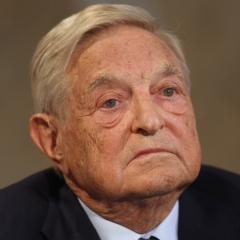
George Soros
George Soros

George Soros, born on August 12, 1930, is a renowned business magnate and philanthropist. He has significant influence in the global financial markets and is known for his unique investment strategies and philosophy. In the 1970s, Soros founded the Quantum Fund, which achieved substantial wealth growth over the following decades. Apart from his success in business, Soros is committed to promoting global democracy and open societies, supporting various educational and charitable projects through the Soros Foundation. more

You May Also Like

“[What Hayek] does not see, or will not admit, [is] that a return to "free" competition means for the great mass of people a tyranny probably worse, because more irresponsible, than that of the State. The trouble with competitions is that somebody wins them. Professor Hayek denies that free capitalism necessarily leads to monopoly, but in practice that is where it has led, and since the vast majority of people would far rather have State regimentation than slumps and unemployment, the drift towards collectivism is bound to continue if popular opinion has any say in the matter.”

“These days, however, the main problem comes from the right - from conservatives who, unlike most economists, really do think that the free market is always right - to such an extent that they refuse to believe even the most overwhelming scientific evidence if it seems to suggest a justification for government action.”

“Unfortunately for ethical egoism, the claim that we will all be better off if every one of us does what is in his or her own interest is incorrect. This is shown by what are known as "prisoner's dilemma" situations, which are playing an increasingly important role in discussions of ethical theory... At least on the collective level, therefore, egoism is self-defeating - a conclusion well brought out by Parfit in his aforementioned Reasons and Persons.”

“Markets are interested in profits and profits only; service, quality, and general affluence are different functions altogether. The universal, democratic prosperity that Americans now look back to with such nostalgia was achieved only by a colossal reigning in of markets, by the gargantuan effort of mass, popular organizations like labor unions and of the people themselves, working through a series of democratically elected governments not daunted by the myths of the market.”

“On the conservative side, today's libertarianism is far more dogmatic and devoid of qualification than the liberalism of Adam Smith or J.S. Mill. Like Marxism, libertarianism is a utopian worldview based on an economic-determinist vision of history. Unlike Marxism, libertarianism is highly specific in its predictions about the transition to the utopian world order, rendering it vulnerable to fact.”

“For over a century, popular struggles in the democracies have used the nation-state to temper raw capitalism. The power of voters has offset the power of capital. But as national barriers have come down in the name of freer commerce, so has the capacity of governments to manage capitalism in a broad public interest. So the real issue is not "trade" but democratic governance.”