Quotessence
Home / Quotes / Quote by Charles Dickens

Quote by Charles Dickens

Work

Charles Dickens's works. Charles Dickens ed. [18 vols. of a 21 vol. set. Wanting A child's history of England; Christmas stories; The mystery of Edwin Drood].

This extensive collection of Charles Dickens's literary works features 18 volumes from a larger 21-volume set. It is a curated selection that excludes certain notable titles such as 'A Child's History of England,' 'Christmas Stories,' and 'The Mystery of Edwin Drood.' The remaining volumes are a comprehensive representation of Dickens's writing, showcasing his renowned storytelling and social commentary. more

Author
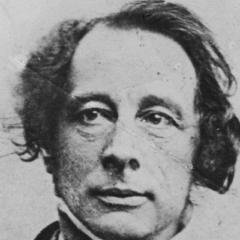
Charles Dickens
Charles Dickens

Charles Dickens, a British writer born on February 7, 1812, and died on June 9, 1870, is one of the greatest novelists of the 19th century. Known for his profound social criticism and vivid narrative style, Dickens' works extensively cover social reality, revealing various issues in the British society of the time. more

You May Also Like

“"Then idiots talk," said Eugene, leaning back, folding his arms, smoking with his eyes shut, and speaking slightly through his nose, "of Energy. If there is a word in the dictionary under any letter from A to Z that I abominate, it is energy."”

“Mr. Tulkinghorn, sitting in the twilight by the open window, enjoys his wine. As if it whispered to him of its fifty years of silence and seclusion, it shuts him up the closer. More impenetrable than ever, he sits, and drinks, and mellows as it were in secrecy, pondering at that twilight hour on all the mysteries he knows.”

“"I take my leave of you, Mr. Creakle, and all of you," said Mr. Mell, glancing round the room, and again patting me gently on the shoulders. "James Steerforth, the best wish I can leave you is that you may come to be ashamed of what you have done today. At present I would prefer to see you anything rather than a friend, to me, or to anyone in whom I feel an interest."”

“Flora, always tall, had grown to be very broad too, and short of breath; but that was not much. Flora, whom he had left a lily, had become a peony; but that was not much. Flora, who had seemed enchanting in all she said and thought, was diffuse and silly. That was much. Flora, who had been spoiled and artless long ago, was determined to be spoiled and artless now. That was a fatal blow.”

“There is something indefinably keen and wan about her anatomy, and she has a watchful way of looking out of the corners of her eyes without turning her head which could be pleasantly dispensed with, especially when she is in an ill humour and near knives. Through all the good taste of her dress and little adornments, these objections so express themselves that she seems to go about like a very neat she-wolf imperfectly tamed.”

“There are people enough to tread upon me in my lowly state, without my doing outrage to their feelings by possessing learning. Learning ain't for me. A person like myself had better not aspire. If he is to get on in life, he must get on 'umbly, Master Copperfield!”

“'There may be some, perhaps - I don't know that there are - who abuse his kindness,' said Mr. Wickfield. 'Never be one of those, Trotwood, in anything. He is the least suspicious of mankind; and whether that's a merit, or whether it's a blemish, it deserves consideration in all dealings with the Doctor, great or small.”

“After tea, we discussed a variety of topics before the fire; and Mrs. Micawber was good enough to sing us (in a small, thin, flat voice, which I remembered to have considered, when I first knew her, the very table-beer of acoustics) the favourite ballads of "The Dashing White Sergeant", and "Little Tafflin".”

“He was the meekest of his sex, the mildest of little men. He sidled in and out of a room, to take up the less space. He walked as softly as the Ghost in Hamlet, and more slowly. He carried his head on one side, partly in modest depreciation of himself, partly in modest propitiation of everybody else.”

“I found Uriah reading a great fat book, with such demonstrative attention, that his lank forefinger followed up every line as he read, and made clammy tracks along the page (or so I fully believed) like a snail.”