Quotessence
Home / Quotes / Quote by Mary Chapin Carpenter

Quote by Mary Chapin Carpenter

Author

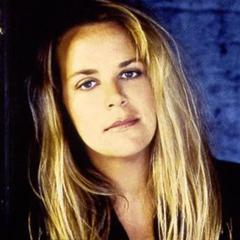
Mary Chapin Carpenter

Mary Chapin Carpenter is an American country music singer-songwriter known for her emotive voice and infectious songs. Since the release of her debut album in 1987, she has won five Grammy Awards and is celebrated for her unique musical style and her focus on social issues. more

You May Also Like

“Since philosophy is the art which teaches us how to live, and since children need to learn it as much as we do at other ages, why do we not instruct them in it? .. But in truth I know nothing about the philosophy of education except this: that the greatest and the most important difficulty known to human learning seems to lie in that area which treats how to bring up children and how to educate them.”

“... knowledge must continually be renewed by ceaseless effort, if it is not to be lost. It resembles a statue of marble which stands in the desert and is continually threatened with burial by the shifting sand. The hands of service must ever be at work, in order that the marble continue to lastingly shine in the sun. To these serving hands mine shall also belong.”

“I believe, indeed, that overemphasis on the purely intellectual attitude, often directed solely to the practical and factual, in our education, has led directly to the impairment of ethical values. I am not thinking so much of the dangers with which technical progress has directly confronted mankind, as of the stifling of mutual human considerations by a 'matter-of-fact' habit of thought which has come to lie like a killing frost upon human relations. Without 'ethical culture' there is no salvation for humanity.”

“I will say little of the importance of a good education; nor will I stop to prove that the current one is bad. Countless others have done so before me, and I do not like to fill a book with things everybody knows. I will note that for the longest time there has been nothing but a cry against the established practice without anyone taking it upon himself to propose a better one. The literature and the learning of our age tend much more to destruction than to edification.”

“I would like to suggest that our minds are swamped by too much study and by too much matter just as plants are swamped by too much water or lamps by too much oil; that our minds, held fast and encumbered by so many diverse preoccupations, may well lose the means of struggling free, remaining bowed and bent under the load; except that it is quite otherwise: the more our souls are filled, the more they expand; examples drawn from far-off times show, on the contrary, that great soldiers ad statesmen were also great scholars.”

“Their pupils and their little charges are not nourished and fed by what they learn: the learning is passed from hand to hand with only one end in view: to show it off, to put into our accounts to entertain others with it, as though it were merely counters, useful for totting up and producing statements, but having no other use or currency. 'Apud alios loqui didicerunt, non ipsi secum' [They have learned how to talk with others, not with themselves]”

“Learning is a good medicine: but no medicine is powerful enough to preserve itself from taint and corruption independently of defects in the jar that it is kept in. One man sees clearly but does not see straight: consequently he sees what is good but fails to follow it; he sees knowledge and does not use it.”