Quotessence
Home / Quotes / Quote by David Hume

Quote by David Hume

“The whole of natural theologyresolves itself into one simple, though somewhat ambiguous proposition, That the cause or causesof order in the universe probably bear some remote analogy to human intelligence.”

Quote by David Hume

Author
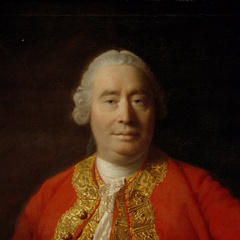
David Hume
David Hume

David Hume, born on May 7, 1711, in Edinburgh, Scotland, and died on August 25, 1776, was an outstanding philosopher, historian, and economist. Known for his contributions to empiricism and skepticism, his works have had a profound impact on subsequent philosophy, economics, and psychology. more

You May Also Like

“I shall venture to affirm, that there never was a popular religion, which represented the state of departed souls in such a light,as would render it eligible for human kind, that there should be such a state. These fine models of religion are the mere product of philosophy. For as death lies between the eye and the prospect of futurity, that event is so shocking to nature, that it must throw a gloom on all the regions which lie beyond it; and suggest to the generality of mankind the idea of Cerberus and Furies; devils, and torrents of fire and brimstone.”

“Every disastrous accident alarms us, and sets us on enquiries concerning the principles whence it arose: Apprehensions spring up with regard to futurity: And the mind, sunk into diffidence, terror, and melancholy, has recourse to every method of appeasing those secret intelligent powers, on whom our fortune is supposed entirely to depend.”

“Reason, in a strict sense, as meaning the judgment of truth and falsehood, can never, of itself, be any motive to the will, and can have no influence but so far as it touches some passion or affection. Abstract relations of ideas are the object of curiosity, not of volition. And matters of fact, where they are neither good nor evil, where they neither excite desire nor aversion, are totally indifferent, and whether known or unknown, whether mistaken or rightly apprehended, cannot be regarded as any motive to action.”

“To invent without scruple a new principle to every new phenomenon, instead of adapting it to the old; to overload our hypothesis with a variety of this kind, are certain proofs that none of these principles is the just one, and that we only desire, by a number of falsehoods, to cover our ignorance of the truth.”

“The conduct of a man, who studies philosophy in this careless manner, is more truly sceptical than that of any one, who feeling inhimself an inclination to it, is yet so over-whelm'd with doubts and scruples, as totally to reject it. A true sceptic will be diffident of his philosophical doubts, as well as of his philosophical conviction; and will never refuse any innocent satisfaction, which offers itself, upon account of either of them.”

“Nothing can be more real, or concern us more, than our own sentiments of pleasure and uneasiness; and if these be favourable to virtue and unfavourable to vice, no more can be requisite to the regulation of our conduct and behavior.”