Quotessence
Home / Quotes / Quote by David Hume

Quote by David Hume

“Reason, in a strict sense, as meaning the judgment of truth and falsehood, can never, of itself, be any motive to the will, and can have no influence but so far as it touches some passion or affection. Abstract relations of ideas are the object of curiosity, not of volition. And matters of fact, where they are neither good nor evil, where they neither excite desire nor aversion, are totally indifferent, and whether known or unknown, whether mistaken or rightly apprehended, cannot be regarded as any motive to action.”

Quote by David Hume

Work

A Dissertation on the Passions: The Natural History of Religion : a Critical Edition

This critical edition of 'A Dissertation on the Passions: The Natural History of Religion' offers a scholarly examination of the complex interplay between human emotions and religious beliefs. The work explores the origins, expressions, and effects of religious passions, providing insights into the historical and philosophical underpinnings of religious phenomena. It is a comprehensive study that combines historical analysis with philosophical inquiry, aiming to shed light on the role of religion in shaping human societies. more

Author
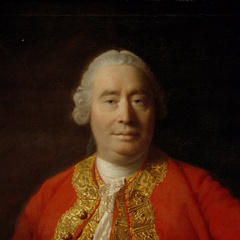
David Hume
David Hume

David Hume, born on May 7, 1711, in Edinburgh, Scotland, and died on August 25, 1776, was an outstanding philosopher, historian, and economist. Known for his contributions to empiricism and skepticism, his works have had a profound impact on subsequent philosophy, economics, and psychology. more

You May Also Like

“To invent without scruple a new principle to every new phenomenon, instead of adapting it to the old; to overload our hypothesis with a variety of this kind, are certain proofs that none of these principles is the just one, and that we only desire, by a number of falsehoods, to cover our ignorance of the truth.”

“The conduct of a man, who studies philosophy in this careless manner, is more truly sceptical than that of any one, who feeling inhimself an inclination to it, is yet so over-whelm'd with doubts and scruples, as totally to reject it. A true sceptic will be diffident of his philosophical doubts, as well as of his philosophical conviction; and will never refuse any innocent satisfaction, which offers itself, upon account of either of them.”

“Nothing can be more real, or concern us more, than our own sentiments of pleasure and uneasiness; and if these be favourable to virtue and unfavourable to vice, no more can be requisite to the regulation of our conduct and behavior.”

“The whole is a riddle, an enigma, an inexplicable mystery. Doubt, uncertainty, suspence of judgment appear the only result of ourmost accurate scrutiny, concerning this subject. But such is the frailty of human reason, and such the irresistible contagion of opinion, that even this deliberate doubt could scarcely be upheld; did we not enlarge our view, and opposing one species of superstition to another, set them a quarrelling; while we ourselves, during their fury and contention, happily make our escape into the calm, though obscure, regions of philosophy.”

“If we confine ourselves to a general and distant reflection on the ills of human life, that can have no effect to prepare us for them. If by close and intense meditation we render them present and intimate to us, that is the true secret for poisoning all our pleasures, and rendering us perpetually miserable.”

“On the theory of the soul's mortality, the inferiority of women's capacity is easily accounted for: Their domestic life requires no higher faculties either of mind or body. This circumstance vanishes and becomes absolutely insignificant, on the religious theory: The one sex has an equal task to perform as the other: Their powers of reason and resolution ought also to have been equal, and both of them infinitely greater than at present.”

“No one can doubt, that the convention for the distinction of property, and for the stability of possession, is of all circumstances the most necessary to the establishment of human society, and that after the agreement for the fixing and observing of this rule, there remains little or nothing to be done towards settling a perfect harmony and concord.”

“Nothing is demonstrable, unless the contrary implies a contradiction. Nothing, that is distinctly conceivable, implies a contradiction. Whatever we conceive as existent, we can also conceive as non-existent. There is no being, therefore, whose non-existence implies a contradiction. Consequently there is no being, whose existence is demonstrable.”