“On the theory of the soul's mortality, the inferiority of women's capacity is easily accounted for: Their domestic life requires no higher faculties either of mind or body. This circumstance vanishes and becomes absolutely insignificant, on the religious theory: The one sex has an equal task to perform as the other: Their powers of reason and resolution ought also to have been equal, and both of them infinitely greater than at present.”
Quote by David Hume
Work
Dialogues Concerning Natural Religion (Second Edition)
This book is a comprehensive philosophical work that delves into the debate on the existence of God and the nature of religion. It features a structured dialogue format, with three characters engaging in a profound discussion on these topics. The second edition likely includes additional insights or revisions from the original publication. more
Author
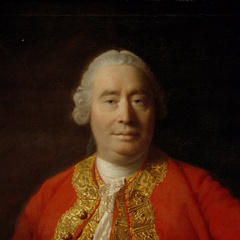
David Hume
David Hume, born on May 7, 1711, in Edinburgh, Scotland, and died on August 25, 1776, was an outstanding philosopher, historian, and economist. Known for his contributions to empiricism and skepticism, his works have had a profound impact on subsequent philosophy, economics, and psychology. more
You May Also Like
Source: An Enquiry Concerning Human Understanding
Source: A Treatise of Human Nature
Source: Dialogues sur la religion naturelle
Source: An Enquiry Concerning Human Understanding: Revision of Great Book
Source: The Philosophy of David Hume
Source: An Enquiry Concerning Human Understanding ; [with] A Letter from a Gentleman to His Friend in Edinburgh ; [and] An Abstract of a Treatise of Human Nature
Source: An Enquiry Concerning the Human Understanding: And An Enquiry Concerning the Principles of Morals
Source: A Dissertation on the Passions: The Natural History of Religion : a Critical Edition
Source: Essays and Treatises on Several Subjects