“The judiciary of the United States is the subtle corps of sappers and miners constantly working under ground to undermine the foundations of our confederated fabric. They are construing our constitution from a co-ordination of a general and special government to a general and supreme one alone.”
Quote by Thomas Jefferson
Work
Correspondence. Reports and opinions while secretarry of state
This book offers a collection of correspondence and insights from an individual serving as Secretary of State, providing a glimpse into the political and diplomatic landscape of their time. more
Author
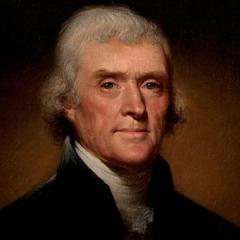
Thomas Jefferson
Thomas Jefferson was the third President of the United States, a distinguished politician, philosopher, architect, and scientist. He was born on April 13, 1743, and died on July 4, 1826. Jefferson advocated for democracy and freedom in politics and was one of the main authors of the Declaration of Independence. His political ideas had a profound impact on the founding and development of the United States. more
You May Also Like
Source: Memoir, correspondence, and miscellanies from the papers of T. Jefferson
Source: The Federalist, on the New Constitution, Written in 1788
Source: The Federalist Papers: A Collection of Essays Written in Favour of the New Constitution
Source: Commentaries on the Constitution of the United States: With a Preliminary Review of the Constitutional History of the Colonies and States, Before the Adoption of the Constitution
Source: Commentaries on the Constitution of the United States: With a Preliminary Review of the Constitutional History of the Colonies and States Before the Adoption of the Constitution
Source: The Real Thomas Jefferson
Source: The Federalist on the New Constitution, Written in the Year 1788, with an Appendix Containing the Letters of Pacificus and Helvidius on the Proclamation of Neutrality of 1793
Source: The Federalist