Quotessence
Home / Quotes / Quote by Samuel Sharpe

Quote by Samuel Sharpe

Work

Egyptian mythology and Egyptian Christianity, with their influence on the opinions of modern Christendom

The book delves into the historical and cultural connections between Egyptian mythology and the early Christian community in Egypt. It analyzes how these ancient beliefs influenced the formation of Christian doctrine and the religious landscape of modern Christendom. more

Author
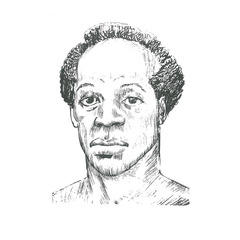
Samuel Sharpe
Samuel Sharpe

Samuel Sharpe was an individual active between 1801 and May 23, 1832, with his profession and category currently unknown. more

You May Also Like

“We have the Annunciation, the Conception, the Birth and the Adoration, as described in the first and second chapters of Luke's gospel; and as we have historical assurance that the chapters in Matthew's gospel which contain the miraculous birth are an after addition not in the earliest manuscripts, it seems probable that these two poetical chapters in Luke may also be unhistorical, and borrowed from the Egyptian accounts of the miraculous births of their kings.”

“The evening was very professionally organized, and most of the people were exceptionally polite, although it did make me a little nervous when one church official told me after the debate when a big crowd of people surrounded me that he had assigned me a body guard "just in case." Just in case what? I thought Christians were suppose to be exceptionally tolerant. Well, in any case, I guess I was grateful for the gesture, "just in case."”

“The Jews emerge into history, not a nation of keen spiritual aspirations and altruistic ethics, but that pagan people, worshipping rocks, sheep and cattle, and spirits of caves and wells, of whom the Old Testament, tending towards its higher ideal, gives fragmentary but convincing evidence.”

“I believe strongly in the Constitutional principle of separating church and state. Our founders were right in fearing that religious freedom would be threatened in the long run by a departure from governmental neutrality in spiritual matters.”

“Man stands alone in the universe, a unique product of a long, unconscious, impersonal, material process with unique understanding and potentialities. These he owes to no one but himself, and it is to himself that he is responsible. He is not the creature of uncontrollable and undeterminable forces, but is his own master. He can and must decide and manage his own destiny.”

“An important tradition within westren philosophy believes in the primacy of natural science as a guide to truth. This is sometimes met with the charge that such an allegiance amounts to scientism - the view that the only things that really exist are those recognized by fundamental physical theory, and that the only forms of genuine knowledge are scientific ones.”