Quotessence
Home / Quotes / Quote by William Wordsworth

Quote by William Wordsworth

“Now when the primrose makes a splendid show, And lilies face the March-winds in full blow, And humbler growths as moved with one desire Put on, to welcome spring, their best attire, Poor Robin is yet flowerless; but how gay With his red stalks upon this sunny day!”

Quote by William Wordsworth

Work

Complete Poetical Works

This book encompasses a wide range of poetic works, showcasing the author's creative expression and thematic diversity throughout their career. more

Author
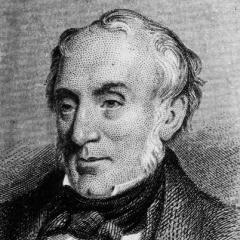
William Wordsworth
William Wordsworth

William Wordsworth was an English Romantic poet, born on April 7, 1770, in Cockermouth, and died on April 23, 1850. His poetry is renowned for its depiction of natural landscapes and profound expression of personal emotions and inner world. more

You May Also Like

“A soul so pitiably forlorn, If such do on this earth abide, May season apathy with scorn, May turn indifference to pride; And still be not unblest- compared With him who grovels, self-debarred From all that lies within the scope Of holy faith and christian hope; Or, shipwrecked, kindles on the coast False fires, that others may be lost.”

“In spite of difference of soil and climate, of language and manners, of laws and customs-in spite of things silently gone out of mind, and things violently destroyed, the Poet binds together by passion and knowledge the vast empire of human society, as it is spread over the whole earth, and over all time.”

“I think that the philosopher must, for his own purposes, carry methodological strictness to an extreme when he is investigating and pursuing his truths, but when he is ready to enunciate them and give them out, he ought to avoid the cynical skill with which some scientists, like a Hercules at the fair, amuse themselves by displaying to the public the biceps of their technique.”

“Were art to redeem man, it could do so only by saving him from the seriousness of life and restoring him to an unexpected boyishness. The symbol of art is seen again in the magic flute of the Great God Pan which makes the young goats frisk at the edge of the grove. All modern art begins to appear comprehensible and in a way great when it is interpreted as an attempt to instill youthfulness into an ancient world.”

“Strictly speaking, the mass, as a psychological fact, can be defined without waiting for individuals to appear in mass formation. In the presence of one individual we can decide whether he is "mass" or not. The mass is all that which sets no value on itself good or ill based on specific grounds, but which feels itself "just like everybody," and nevertheless is not concerned about it; is, in fact, quite happy to feel itself as one with everybody else.”

“The history of the Roman Empire is also the history of the uprising of the Empire of the Masses, who absorb and annul the directing minorities and put themselves in their place. Then, also, is produced the phenomenon of agglomeration, of "the full." For that reason, as Spengler has very well observed, it was necessary, just as in our day, to construct enormous buildings. The epoch of the masses is the epoch of the colossal.”

“I have never said that human society ought to be aristocratic, but a great deal more than that. What I have said, and still believe with ever-increasing conviction, is that human society is always, whether it will or no, aristocratic by its very essence, to the extreme that it is a society in the measure that it is aristocratic, and ceases to be such when it ceases to be aristocratic. Of course I am speaking now of society and not of the State.”