Quotessence
Home / Quotes / Quote by Kabir

Quote by Kabir

“Though One Brahman is the Cause of the Many. ... Behold but One in all things it is the second that leads you astray.”

Quote by Kabir

Author
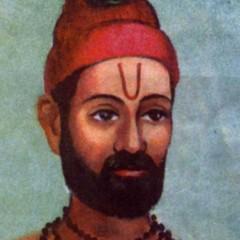
Kabir
Kabir

Kabir (1440-1518), a renowned Indian poet and mystic, is celebrated for his poetry that blends elements of Hinduism, Islam, and Sikhism. His works are known for their simplicity and depth, reflecting profound thoughts on the universe, life, and divinity. Kabir's poetry is cherished by the Indian people and has had a lasting impact on Indian literature and religion. more

You May Also Like

“So long as people do not consider all men as their brothers and do not consider human life as the most sacred thing, which rather than destroy they must consider it their first and foremost duty to support; that is so long as people do not behave towards one another in a religious manner, they will always ruin one another's lives for the sake of personal gain.”

“My doctrine means that I must identify myself with life, with everything that lives, that I must share the majesty of life in the presence of God. The sum-total of this life is God. .. Man is not at peace with himself until he has become like unto God. The endeavor to reach this state is the supreme, the only ambition worth having. And this is self-realisation. This self-realisation is the subject of the Gita, as it is of all scriptures... to be a real devotee is to realise oneself. Self-realisation is not something apart.”

“There has been a controversy started of late, much better worth examination, concerning the general foundation of Morals; whether they be derived from Reason, or from Sentiment; whether we attain the knowledge of them by a chain of argument and induction, or by an immediate feeling and finer internal sense; whether, like all sound judgement of truth and falsehood, they should be the same to every rational intelligent being; or whether, like the perception of beauty and deformity, they be founded entirely on the particular fabric and constitution of the human species.”

“Truth is disputable; not taste: what exists in the nature of things is the standard of our judgement; what each man feels within himself is the standard of sentiment. Propositions in geometry may be proved, systems in physics may be controverted; but the harmony of verse, the tenderness of passion, the brilliancy of wit, must give immediate pleasure. No man reasons concerning another's beauty; but frequently concerning the justice or injustice of his actions.”

“These arguments on each side (and many more might be produced) are so plausible, that I am apt to suspect, they may, the one as well as the other, be solid and satisfactory, and that reason and sentiment concur in almost all moral determinations and conclusions.”