Quotessence
Home / Quotes / Quote by Jonathan Raban

Quote by Jonathan Raban

“The city has always been an embodiment of hope and a source of feeling guilt; a dream pursued, and found vain, wanting, and destructive.”

Quote by Jonathan Raban

Author
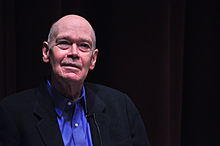
Jonathan Raban
Jonathan Raban

Jonathan Raban, born on June 14, 1942, is a renowned travel writer from the United Kingdom. His works are known for their unique perspective and profound insights into travel experiences, covering a wide range of regions from Africa to the Americas. Raban's writing style often blends travel literature, history, and philosophy, giving his works a distinct literary value. more

You May Also Like

“The only real river I knew was hardly more than a brook. It spilled through a tumbledown mill at the bottom of our road, opened into a little trouty pool, then ran on through water meadows over graveled shallows into Fakenham [England], where it slowed and deepened, gathering strength for the long drifts across muddy flatlands to Norwich and the North Sea.”

“Living in cities is an art, and we need the vocabulary of art, of style, to describe the peculiar relationship between man and material that exists in the continual creative play of urban living. The city as we imagine it, then, soft city of illusion, myth, aspiration, and nightmare, is as real, maybe more real, than the hard city one can locate on maps in statistics, in monographs on urban sociology and demography and architecture.”

“One of the oddest features of western Christianized culture is its ready acceptance of the myth of the stable family and the happy marriage. We have been taught to accept the myth not as an heroic ideal, something good, brave, and nearly impossible to fulfil, but as the very fiber of normal life. Given most families and most marriages, the belief seems admirable but foolhardily.”

“Life, as the most ancient of all metaphors insists, is a journey; and the travel book, in its deceptive simulation of the journey's fits and starts, rehearses life's own fragmentation. More even than the novel, it embraces the contingency of things.”