Quotessence
Home / Quotes / Quote by Tony Blair

Quote by Tony Blair

“Can we be sure that terrorism and WMD will join together? If we are wrong, we will have destroyed a threat that, at its least is responsible for inhuman carnage and suffering. That is something I am confident history will forgive. But if our critics are wrong and we do not act, then we will have hesitated in face of this menace, when we should have given leadership. That is something history will not forgive.”

Quote by Tony Blair

Author
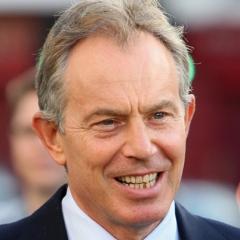
Tony Blair
Tony Blair

Tony Blair, born on May 6, 1953, is a former Prime Minister of the United Kingdom. He served as the leader of the Labour Party and Prime Minister from 1997 to 2007. Blair is known for his role in the 2003 invasion of Iraq and his efforts to promote global peace and development. more

You May Also Like

“Our system freed the individual genius of man. Released him to fly as high & as far as his own talent & energy would take him. We allocate resources not by government. decision but by the millions of decisions customers make when they go into the market. place to buy. If something seems too high-priced we buy something else. Thus resources are steered toward those things the people want most at the price they are willing to pay. It may not be a perfect system but it's better than any other that's ever been tried.”

“The main plank in the National Socialist program is to abolish the liberalistic concept of the individual and the Marxist concept of humanity and to substitute for them the folk community, rooted in the soil and bound together by the bond of its common blood.”

“Liberals and leftists have been dismissing inconvenient facts by attacking motives for generations. In the 1930s, '40s, and '50s, Soviet spies and abettors attacked the motives of their accusers because the fact of their guilt was undeniable. In the 1960s, over a thousand psychiatrists who'd never even met Barry Goldwater signed a petition saying the GOP candidate was too mentally unstable to be president.”

“Churchmen are quick to defend religious freedom; lawyers were never so universally aroused as by President Roosevelt's Court bill; newspapers are most alert to civil liberties when there is a hint of press censorship in the air. And educators become perturbed at every effort to curb academic freedom. But too seldom do all of these become militant when ostensibly the rights of only one group are threatened. They do not always react to the truism that when the rights of any individual or group are chipped away, the freedom of all erodes.”