Quotessence
Home / Quotes / Quote by Gifford Pinchot

Quote by Gifford Pinchot

“The American Colossus was fiercely intent on appropriating and exploiting the riches of all continents - grasping with both hands, reaping where he had not sown, wasting what he thought would last forever. New railroads were opening new territory. The exploiters were pushing farther and farther into the wilderness. The man who could get his hands on the biggest slice of natural resources was the best citizen. Wealth and virtue were supposed to trot in double harness.”

Quote by Gifford Pinchot

Work

Breaking New Ground

This comprehensive work delves into the transformative concepts and innovations that have reshaped a particular area of study or practice. more

Author

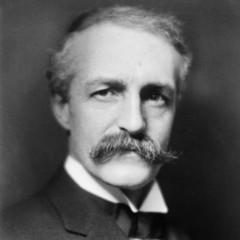
Gifford Pinchot
Gifford Pinchot

Gifford Pinchot was a prominent American forester, conservationist, and the first Chief of the United States Forest Service. He served as the Governor of Pennsylvania from 1911 to 1915. Pinchot was a leading advocate for scientific forestry and played a crucial role in the development of the modern forestry profession. more

You May Also Like

“The consumer wants food to be as cheap as possible. The producer wants it to be as expensive as possible. Both want it to involve as little labor as possible. And so the standards of cheapness and convenience, which are irresistibly simplifying and therefore inevitably exploitive, have been substituted for the standard of health (of both people and land), which would enforce consideration of essential complexities.”

“The country was made without lines of demarcation, and it is no man's business to divide it... Do not misunderstand me, but understand me fully with reference to my affection for the land. I never said the land was mine to do with it as I chose. The one who has the right to dispose of it is the one who created it. I claim a right to live on my land and accord you the privilege to live on yours.”

“The current economic crisis...has numerous causes and sends a powerful message about the need for a profound revision of the model of global economic development. It's an acute symptom that is added to other more grave and already well-known ones, such as the continued imbalance between wealth and poverty, the scandal of hunger, the ecological emergency and the problem of unemployment, which has now become general. In this context a strategic re-launching of agriculture appears decisive.”

“The ecology of the valley was complex beyond our understanding, and it began to die as we went on manipulating it in ever more frantic ways. As it went dead and empty of the old life it became a place where no one wanted to live. In our right minds we want to seek out places that reek of complexity. Our drive to industrialize soured and undercut the intimacies that drew most people to country life in the first place.”

“The farmer and the farm, like "the environment," are looked upon, for example, as means to offset trade deficits. The farm is a place where we can externalize costs. The cost of pesticides to the farmer and the cost of the pesticides to the soil and groundwater are regarded similarly by the public: "a serious problem that something ought to be done about." But the problem is more fundamental than this glib statement would indicate, for soil pollution is an expense of production. So are pesticides and nitrates in our farm wells. So is the loss of farmers from the land.”

“The prairies were dust. Day after day, summer after summer, the scorching winds blew the dust and the sun was brassy in a yellow sky. Crop after crop failed. Again and again the barren land must be mortgaged for taxes and food and next year's seed. The agony of hope ended when there was not harvest and no more credit, no money to pay interest and taxes; the banker took the land. Then the bank failed.”

“The reality is that the founding fathers were land speculators. The fact was that you couldn't vote in this country if you did not own land, and that was basically you had to be a white man who owned land. Now how did they get that land? They basically had to steal it from someone, and that would be probably the Indians. And so most of the initial founding fathers were, while they may have had some really nice ideas about democracy, they had a lot of issues with people of color. They had a lot of issues with people who held things that they coveted.”