Quotessence
Home / Quotes / Quote by Pankaj Mishra

Quote by Pankaj Mishra

“We need a more complex understanding of writers working under authoritarian or repressive regimes. Something to replace this simpleminded, Cold War-ish equation in which the dissident in exile is seen as a bold figure, and those who choose to work with restrictions on their freedom are considered patsies for repressive governments. Let's not forget that most writers in history have lived under nondemocratic regimes: Shakespeare, Tolstoy, and Goethe didn't actually enjoy constitutionally guaranteed rights to freedom of speech.”

Quote by Pankaj Mishra

Author
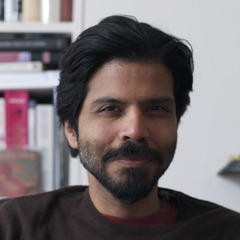
Pankaj Mishra
Pankaj Mishra

Pankaj Mishra is an Indian-born British essayist and historian, recognized for his insightful and critical essays on history, politics, and culture. Born in 1969, he has gained attention for his exploration of the complexities of modernity and its effects on the world. more

You May Also Like

“The recent past is full of diverse examples of writers - Mahfouz in Egypt, Pamuk in Turkey, and more interestingly, Pasternak in the Soviet Union - who have conducted their arguments with their societies and its political arrangements through their art in subtle, oblique ways. They didn't always have the license to make bold pronouncements about freedom, democracy, Islam, and liberalism, but they exerted another kind of moral authority through their work.”

“I think our conception of literature should accommodate not only apolitical writers but also those whose political opinions we find unpalatable. Fiction after all comes from a different, less rationally manipulable side of the brain. I am personally very attached to reactionary figures like Dostoyevsky, Hamsun, and Céline.”

“I think overtly political novels - those that never transcend or contest their author's conscious intentions and prejudices - are problematic. This is not just true of the innumerable unread books in the socialist realist tradition, but also of novels that carry the burden of conservative ideologies, like Guerrillas, Naipaul's worst book, where the author's disgust for a certain kind of black activist and white liberal is overpowering.”

“I think a more complex idea of fiction - and the human self's relationship with the world - emerges when we abandon this philistine equation between literature and liberalism and human goodness, and pay some attention to the darker, ambiguous, and often muddled energies and motivations that shape a work of art. If we do this, we can appreciate a writer like Céline or Gottfried Benn without worrying whether they conform to existing notions of political incorrectness.”

“Incidentally, I am intrigued by how many European and Latin American writers expressed their political views in the columns they routinely wrote or write in the popular press, like Saramago, Vargas Llosa, and Eco. This strikes me as one way of avoiding opinionated fiction, and allowing your imagination a broader latitude. Similarly, fiction writers from places like India and Pakistan are commonly expected to provide primers to their country's histories and present-day conflicts. But we haven't had that tradition in Anglo-America.”

“Once you get past the grand normative claims made in the West for literature, especially the novel, in the post-Christian era - that it is a secular substitute for religion, hallmark of modern civilization, a priori liberal and cosmopolitan, with authors appearing to implicitly embody such pious ideals - you encounter a less agreeable reality: parochialism, blinkered views, even racial prejudices of the kind the bourgeoisie have held everywhere.”