Quotessence
Home / Quotes / Quote by Wilhelm Reich

Quote by Wilhelm Reich

“Religion, with its metaphysical error of absolute guilt, dominated the broadest, the cosmic realm. From there, it infiltrated the subordinate realms of biological, social and moral existence with its errors of the absolute and inherited guilt. Humanity, split up into millions of factions, groups, nations and states, lacerated itself with mutual accusations. "The Greeks are to blame," the Romans said, and "The Romans are to blame," the Greeks said. So they warred against one another. "The ancient Jewish priests are to blame," the early Christians shouted. "The Christians have preached the wrong Messiah," the Jews shouted and crucified the harmless Jesus. "The Muslims and Turks and Huns are guilty," the crusaders screamed. "The witches and heretics are to blame," the later Christians howled for centuries, murdering, hanging, torturing and burning heretics. It remains to investigate the sources from which the Jesus legend derives its grandeur, emotional power and perseverance. Let us continue to stay outside this St. Vitus dance. The longer we look around, the crazier it seems. Hundreds of minor patriarchs, self-proclaimed kings and princes, accused one another of this or that sin and made war, scorched the land, brought famine and epidemics to the populations. Later, this became known as "history." And the historians did not doubt the rationality of this history. Gradually the common people appeared on the scene. "The Queen is to blame," the people's representatives shouted, and beheaded the Queen. Howling, the populace danced around the guillotine. From the ranks of the people arose Napoleon. "The Austrians, the Prussians, the Russians are to blame," it was now said. "Napoleon is to blame," came the reply. "The machines are to blame!" the weavers screamed, and "The lumpenproletariat is to blame," sounded back. "The Monarchy is to blame, long live the Constitution!" the burgers shouted. "The middle classes and the Constitution are to blame; wipe them out; long live the Dictatorship of the Proletariat," the proletarian dictators shout, and "The Russians are to blame," is hurled back. "Germany is to blame," the Japanese and the Italians shouted in 1915. "England is to blame," the fathers of the proletarians shouted in 1939. And "Germany is to blame," the self-same fathers shouted in 1942. "Italy, Germany and Japan are to blame," it was said in 1940. It is only by keeping strictly outside this inferno that one can be amazed that the human animal continues to shriek "Guilty!" without doubting its own sanity, without even once asking about the origin of this guilt. Such mass psychoses have an origin and a function. Only human beings who are forced to hide something catastrophic are capable of erring so consistently and punishing so relentlessly any attempt at clarifying such errors.”

Quote by Wilhelm Reich

Work

Ether, God and Devil: Cosmic Superimposition

Browse quotes and source details for this work. more

Author
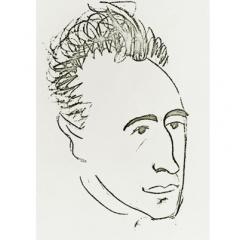
Wilhelm Reich
Wilhelm Reich

Wilhelm Reich was a prominent psychoanalyst, born on March 24, 1897, and died on November 3, 1957. He made significant contributions to the field of psychoanalysis, particularly in the areas of sexual psychology and orgonomy. more

You May Also Like

“I leave the kitchen table to bathe, and to dress for church. If only my closet held on its shelves an array of faces I could wear rather than dresses, I would know which face to put on today. As for the dresses, I haven't a clue.”

“Just because your electronics are better than ours, you aren't necessarily superior in any way. Look, imagine that you humans are a man in LA with a brand-new Trujillo and we are a nuhp in New York with a beat-up old Ford. The two fellows start driving toward St. Louis. Now, the guy in the Trujillo is doing 120 on the interstates, and the guy in the Ford is putting along at 55; but the human in the Trujillo stops in Vegas and puts all of his gas money down the hole of a blackjack table, and the determined little nuhp cruises along for days until at last he reaches his goal. It's all a matter of superior intellect and the will to succeed. Your people talk a lot about going to the stars, but you just keep putting your money into other projects, like war and popular music and international athletic events and resurrecting the fashions of previous decades. If you wanted to go into space, you would have.”

“It is a foible of our human nature that when we have an extremely unpleasant experience, it gives us a peculiar satisfaction if it is “the biggest” of its disagreeable kind that has happened since the world began. During a heat wave, for instance, we are very pleased if the papers announce that it is “the highest temperature reached since the year 1881,” and we feel a little resentment towards the year 1881 for having gone us one better. Or if our ears are frozen till all the skin peels off, it fills us with a certain happiness to learn that “it was the hardest frost recorded since 1786.” It is just the same with wars. The war in progress is either the most righteous or the bloodiest, or the most successful, or the longest, since such and such a time; any superlative whatever always affords us the proud satisfaction of having been through something extraordinary and record-breaking.”

“What happened next? I retain nothing from those terrible minutes except indistinct memories which flash into my mind with sudden brutality, like apparitions, among bursts and scenes and visions that are scarcely imaginable. It is difficult even to even to try to remember moments during which nothing is considered, foreseen, or understood, when there is nothing under a steel helmet but an astonishingly empty head and a pair of eyes which translate nothing more than would the eyes of an animal facing mortal danger. There is nothing but the rhythm of explosions, more or less distant, more or less violent, and the cries of madmen, to be classified later, according to the outcome of the battle, as the cries of heroes or of murderers. And there are the cries of the wounded, of the agonizingly dying, shrieking as they stare at a part of their body reduced to pulp, the cries of men touched by the shock of battle before everybody else, who run in any and every direction, howling like banshees. There are the tragic, unbelievable visions, which carry from one moment of nausea to another: guts splattered across the rubble and sprayed from one dying man to another; tightly riveted machines ripped like the belly of a cow which has just been sliced open, flaming and groaning; trees broken into tiny fragments; gaping windows pouring out torrents of billowing dust, dispersing into oblivion all that remains of a comfortable parlor...”

“I suppose there hasn’t been a single month since the war, in any trade you care to name, in which there weren’t more men than jobs. It’s brought a peculiar, ghastly feeling into life. It’s like on a sinking ship when there are nineteen survivors and fourteen lifebelts. But is there anything particularly modern in that, you say? Has it anything to do with the war? Well, it feels as if it had. The feeling that you’ve got to be everlastingly fighting and hustling, that you’ll never get anything unless you grab it from somebody else, that there’s always somebody after your job, that next month or the month after they’ll be reducing staff and it’s you that’ll get the bird – that, I swear, didn’t exist in the old life before the war.”

“The North Korean capital, Pyongyang, is a city consecrated to the worship of a father-son dynasty. (I came to think of them, with their nuclear-family implications, as 'Fat Man and Little Boy.') And a river runs through it. And on this river, the Taedong River, is moored the only American naval vessel in captivity. It was in January 1968 that the U.S.S. Pueblo strayed into North Korean waters, and was boarded and captured. One sailor was killed; the rest were held for nearly a year before being released. I looked over the spy ship, its radio antennae and surveillance equipment still intact, and found photographs of the captain and crew with their hands on their heads in gestures of abject surrender. Copies of their groveling 'confessions,' written in tremulous script, were also on show. So was a humiliating document from the United States government, admitting wrongdoing in the penetration of North Korean waters and petitioning the 'D.P.R.K.' (Democratic People's Republic of Korea) for 'lenience.' Kim Il Sung ('Fat Man') was eventually lenient about the men, but not about the ship. Madeleine Albright didn't ask to see the vessel on her visit last October, during which she described the gruesome, depopulated vistas of Pyongyang as 'beautiful.' As I got back onto the wharf, I noticed a refreshment cart, staffed by two women under a frayed umbrella. It didn't look like much—one of its three wheels was missing and a piece of brick was propping it up—but it was the only such cart I'd see. What toothsome local snacks might the ladies be offering? The choices turned out to be slices of dry bread and cups of warm water. Nor did Madeleine Albright visit the absurdly misnamed 'Demilitarized Zone,' one of the most heavily militarized strips of land on earth. Across the waist of the Korean peninsula lies a wasteland, roughly following the 38th parallel, and packed with a titanic concentration of potential violence. It is four kilometers wide (I have now looked apprehensively at it from both sides) and very near to the capital cities of both North and South. On the day I spent on the northern side, I met a group of aging Chinese veterans, all from Szechuan, touring the old battlefields and reliving a war they helped North Korea nearly win (China sacrificed perhaps a million soldiers in that campaign, including Mao Anying, son of Mao himself). Across the frontier are 37,000 United States soldiers. Their arsenal, which has included undeclared nuclear weapons, is the reason given by Washington for its refusal to sign the land-mines treaty. In August 1976, U.S. officers entered the neutral zone to trim a tree that was obscuring the view of an observation post. A posse of North Koreans came after them, and one, seizing the ax with which the trimming was to be done, hacked two U.S. servicemen to death with it. I visited the ax also; it's proudly displayed in a glass case on the North Korean side.”

“The debacle in Iraq has reinforced the realist dictum, disparaged by idealists in the 1990s, that the legacies of geography, history and culture really do set limits on what can be accomplished in any given place. But the experience in the Balkans reinforced an idealist dictum that is equally true: One should always work near the limits of what is possible rather than cynically give up on any place. In this decade idealists went too far; in the previous one, it was realists who did not go far enough.”

“The Northwestern Carpathians, in which I was raised, were a hard place, as unforgiving as the people who lived there, but the Alpine landscape into which Zlee and I were sent that early winter seemed a glimpse of what the surface of the earth looked and felt and acted like when there were no maps or borders, no rifles or artillery, no men or wars to claim possession of land, and snow and rock alone parried in a match of millennial slowness so that time meant nothing, and death meant nothing, for what life there was gave in to the forces of nature surrounding and accepted its fate to play what role was handed down in the sidereal march of seasons capable of crushing in an instant what armies might--millennia later--be foolish enough to assemble on it heights. And yet there we were, ordered to march ourselves, for God, not nature, was with us now, and God would deliver us, in this world and next, when the time came for that.”