Quotessence
Home / Quotes / Quote by Ambrose Bierce

Quote by Ambrose Bierce

“ABNORMAL, adj. Not conforming to standard. In matters of thought and conduct, to be independent is to be abnormal, to be abnormal is to be detested. Wherefore the lexicographer adviseth a striving toward the straiter [sic] resemblance of the Average Man than he hath to himself. Whoso attaineth thereto shall have peace, the prospect of death and the hope of Hell.”

Quote by Ambrose Bierce

Work

The Devil's Dictionary: The Devil World

This book is a compilation of satirical definitions, offering a humorous and critical take on a wide range of words and ideas, all presented from the viewpoint of a devil. The entries are known for their wit and sarcasm, challenging the reader's understanding of common terms and concepts. more

Author
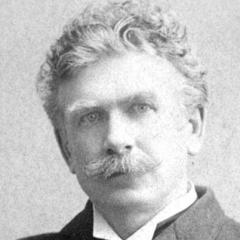
Ambrose Bierce
Ambrose Bierce

Ambrose Bierce was an American journalist, satirist, and editor, renowned for his sharp wit and dark humor. He is best known for his satirical novel 'The Devil's Dictionary' and his short stories. Bierce was born on June 24, 1842, and his exact date of death remains unknown, as he disappeared during the American Civil War. more

You May Also Like

“ACCOMPLICE, n. One associated with another in a crime, having guilty knowledge and complicity, as an attorney who defends a criminal, knowing him guilty. This view of the attorney's position in the matter has not hitherto commanded the assent of attorneys, no one having offered them a fee for assenting.”

“CALLOUS, adj. Gifted with great fortitude to bear the evils afflicting another. When Zeno was told that one of his enemies was no more he was observed to be deeply moved. "What!" said one of his disciples, "you weep at the death of an enemy?" "Ah, 'tis true," replied the great Stoic; "but you should see me smile at the death of a friend.".”

“SCARABAEUS, n. The sacred beetle of the ancient Egyptians, allied to our familiar "tumble-bug." It was supposed to symbolize immortality, the fact that God knew why giving it its peculiar sanctity. Its habit of incubating its eggs in a ball of ordure may also have commended it to the favor of the priesthood, and may some day assure it an equal reverence among ourselves. True, the American beetle is an inferior beetle, but the American priest is an inferior priest.”

“HOG, n. A bird remarkable for the catholicity of its appetite and serving to illustrate that of ours. Among the Mahometans and Jews, the hog is not in favor as an article of diet, but is respected for the delicacy and the melody of its voice. It is chiefly as a songster that the fowl is esteemed; the cage of him in full chorus has been known to draw tears from two persons at once. The scientific name of this dicky-bird is _Porcus Rockefelleri_. Mr. Rockefeller did not discover the hog, but it is considered his by right of resemblance.”

“PRIMATE, n. The head of a church, especially a State church supported by involuntary contributions. The Primate of England is the Archbishop of Canterbury, an amiable old gentleman, who occupies Lambeth Palace when living and Westminster Abbey when dead. He is commonly dead.”

“ZANY, n. A popular character in old Italian plays, who imitated with ludicrous incompetence the _buffone_, or clown, and was therefore the ape of an ape; for the clown himself imitated the serious characters of the play. The zany was progenitor to the specialist in humor, as we to-day have the unhappiness to know him. In the zany we see an example of creation; in the humorist, of transmission. Another excellent specimen of the modern zany is the curate, who apes the rector, who apes the bishop, who apes the archbishop, who apes the devil.”