“Pay little attention to discouragement as possible. Plough ahead as a steamer does, rough or smooth - rain or shine. To carry your cargo and make your port is the point.”
Quote by Maltbie Davenport Babcock
Work
Thoughts for Every-day Living from the Spoken and Written Words of Maltbie Davenport Babcock
This book features a compilation of insightful and motivational quotes and reflections drawn from the writings and speeches of Maltbie Davenport Babcock, offering readers a source of wisdom and guidance for daily life. more
Author
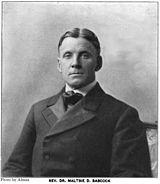
Maltbie Davenport Babcock
Maltbie Davenport Babcock was an American writer renowned for his religious and inspirational poetry. Born on August 3, 1858, he was a prominent figure in the late 19th and early 20th centuries. Babcock's work often reflected his deep religious beliefs and his desire to inspire others. He passed away on May 18, 1901. more
You May Also Like
Source: The Scientific Papers of James Clerk Maxwell
“Any sufficiently advanced technology is indistinguishable from magic.”
Source: The Complete Angler of Izaak Walton and Charles Cotton: Estensively Embellished with Engravings on Copper and Wood, from Original Paintings and Drawings, by First-rate Artists, to which are Added, an Introductory Essay, the Linnœan Arangement of the Various River Fish Delineated in the Work, and Illustrative Notes
“But the best demonstration by far is experience, if it go not beyond the actual experiment.”
Source: Selected Philosophical Works