“He that condemns himself to compose on a stated day will often bring to his task attention dissipated, a memory embarrassed, an imagination overwhelmed, a mind distracted with anxieties, a body languishing with disease: he will labour on a barren topic till it is too late to change it; or, in the ardour of invention, diffuse his thoughts into wild exuberance, which the pressing hour of publication cannot suffer judgment to examine or reduce.”
Quote by Samuel Johnson
Work
The Works of Samuel Johnson: An essay on the life and genius of Dr. Johnson [by A. Murphy] Poems.- v. 2-4. The rambler.- v. 5. The idler. History of Rasselas, prince of Abissinia.- v. 6-8. The lives of the English poets.- v. 9. Lives of eminent persons. Letters, selected from the collection of Mrs. Piozzi and others. Prayers and meditations.- v. 10. Philological tracts, &c.- v. 11. Miscellaneous tracts, &c. Dedications. Reviews and criticisms. Tales of imagination. The adventurers.-
The Works of Samuel Johnson is a comprehensive compilation of the renowned writer's essays, poems, and correspondence. It encompasses a wide range of topics, including the life and genius of Dr. Johnson, the history of Rasselas, and the biographies of English poets and other distinguished figures. The collection also includes selected letters, prayers, meditations, and various tracts, reflecting Johnson's intellectual pursuits and contributions to literature and philosophy. more
Author
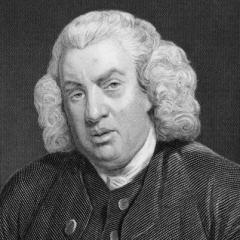
Samuel Johnson
Samuel Johnson was an English writer, poet, and lexicographer, renowned for his comprehensive English dictionary, 'A Dictionary of the English Language', published in 1755. His distinctive writing style and wit have cemented his place as a significant figure in the history of English literature. more
You May Also Like
“To read, write, and converse in due proportions, is, therefore, the business of a man of letters.”
Source: The Wisdom of the Rambler, Adventurer, and Idler
Source: The Works of Samuel Johnson, LL.D.
“Western business people often don't get the importance of establishing human relationships.”
Source: The Works of Samuel Johnson, LL.D.: With Murphy's Essay
Source: The Works of Samuel Johnson, LL.: D., with an Essay on His Life and Genius
Source: Samuel Johnson: Selected Writings
Source: The Works of Samuel Johnson: The Adventurer and Idler
Source: The Idler: With Additional Essays
Source: The Rambler: A Periodical Paper, Published in 1750, 1751, 1752
Source: The Works of Alexander Pope, Esq. in Verse and Prose: Containing the Principal Notes of Drs. Warburton and Warton: Illustrations, and Critical and Explanatory Remarks, by Johnson, Wakefield, A. Chalmers ... and Others; to which are Added, Now First Published, Some Original Letters, with Additional Observations, and Memoirs of the Life of the Author