Quotessence
Home / Quotes / Quote by Horace

Quote by Horace

“Nos numeros sumus et fruges consumere nati. We are but ciphers, born to consume earth's fruits.”

Quote by Horace

Author
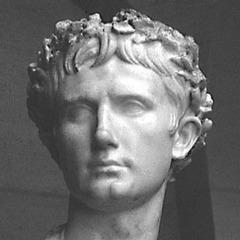
Horace
Horace

Horace, a renowned Roman poet, is celebrated for his elegant Latin style and profound philosophical thoughts. His works span a variety of genres, from satire to odes, and have had a profound impact on literature throughout history. more

You May Also Like

“BIRTH, n. The first and direst of all disasters. As to the nature of it there appears to be no uniformity. Castor and Pollux were born from the egg. Pallas came out of a skull. Galatea was once a block of stone. Peresilis, who wrote in the tenth century, avers that he grew up out of the ground where a priest had spilled holy water. It is known that Arimaxus was derived from a hole in the earth, made by a stroke of lightning. Leucomedon was the son of a cavern in Mount Etna, and I have myself seen a man come out of a wine cellar.”

“Isaac Newton was born at Woolsthorpe, near Grantham, in Lincolnshire, on Christmas Day, 1642: a weakly and diminutive infant, of whom it is related that, at his birth, he might have found room in a quart mug. He died on March the 20th, 1727, after more than eighty-four years of more than average bodily health and vigour; it is a proper pendant to the story of the quart mug to state that he never lost more than one of his second teeth.”

“The way in which the persecution of Galileo has been remembered is a tribute to the quiet commencement of the most intimate change in outlook which the human race had yet encountered. Since a babe was born in a manger, it may be doubted whether so great a thing has happened with so little stir”

“The problem of synchronicity has puzzled me for a long time, ever since the middle twenties, when I was investigating the phenomena of the collective unconscious and kept on coming across connections which I simply could not explain as chance groupings or "runs." What I found were "coincidences" which were connected so meaningfully that their "chance" concurrence would represent a degree of improbability that would have to be expressed by an astronomical figure.”