Quotessence
Home / Quotes / Quote by J. I. Packer

Quote by J. I. Packer

“The Puritan ethic of marriage was first to look not for a partner whom you do love passionately at this moment but rather for one whom you can love steadily as your best friend for life, then to proceed with God’s help to do just that.”

Quote by J. I. Packer

Author
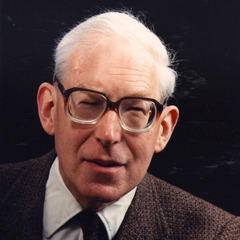
J. I. Packer
J. I. Packer

J. I. Packer is a prominent Christian theologian whose influential writings on Christian doctrine and spirituality have shaped theological discourse. Born on July 22, 1926, Packer has made significant contributions to the field of theology through his extensive scholarly work and theological education. more

You May Also Like

“This is our dilemma--either to taste and not to know or to know and not to taste--or, more strictly, to lack one kind of knowledge because we are in an experience or to lack another kind because we are outside it. [. . .] Of this tragic dilemma myth is the partial solution. In the enjoyment of a great myth we come nearest to experiencing as a concrete what can otherwise be understood only as an abstraction.”

“In Brueghel’s Icarus, for instance: how everything turns away Quite leisurely from the disaster, the ploughman may Have heard the splash, the forsaken cry, But for him it was not an important failure; the sun shone As it had to on the white legs disappearing into the green water, And the expensive ship that must have seen Something amazing, a boy falling out of the sky, Had somewhere to get to and sailed calmly on.”

“You cannot stay on the summit forever; you have to come down again. So why bother in the first place? Just this: What is above knows what is below, but what is below does not know what is above. One climbs, one sees. One descends, one sees no longer, but one has seen. There is an art of conducting oneself in the lower regions by the memory of what one saw higher up. When one can no longer see, one can at least still know.”

“For men and women are not only themselves; they are also the region in which they are born, the city apartment or farm in which they learnt to walk, the games they played as children, the old wives tales they overheard, the food they ate, the schools they attended, the sports they followed, the poets they read, and the God they believed in. It is all these things that have made them what they are, and these are the things that you can't come to know by hearsay.”