Quotessence
Home / Quotes / Quote by Martin Luther

Quote by Martin Luther

“So tenaciously should we cling to the world revealed by the Gospel, that were I to see all the Angels of Heaven coming down to me to tell me something different, not only would I not be tempted to doubt a single syllable, but I would shut my eyes and stop my ears, for they would not deserve to be either seen or heard.”

Quote by Martin Luther

Author
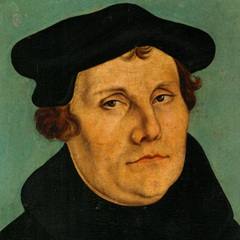
Martin Luther
Martin Luther

Martin Luther, born on November 10, 1483 and died on February 18, 1546, was a significant figure in the German Reformation. He was a monk, theologian, philosopher, and writer, known for his leading role in the Reformation. Luther challenged the authority of the Roman Catholic Church and translated the Bible into German, which had a profound impact on German culture and religion. more

You May Also Like

“In the second century of the Christian era, the Empire of Rome comprehended the fairest part of the earth, and the most civilised portion of mankind. The frontiers of that extensive monarchy were guarded by ancient renown and disciplined valour. The gentle but powerful influence of laws and manners had gradually cemented the union of the provinces. Their peaceful inhabitants enjoyed and abused the advantages of wealth and luxury.”

“The image of a free constitution was preserved with decent reverence: the Roman senate appeared to possess the sovereign authority, and devolved on the emperors all the executive powers of government. During a happy period (A.D. 98-180) of more than fourscore years, the public administration was conducted by the virtue and abilities of Nerva, Trajan, Hadrian, and the two Antonines.”

“That public virtue which among the ancients was denominated patriotism, is derived from a strong sense of our own interest in the preservation and prosperity of the free government of which we are members. Such a sentiment, which had rendered the legions of the republic almost invincible, could make but a very feeble impression on the mercenary servants of a despotic prince; and it became necessary to supply that defect by other motives, of a different, but not less forcible nature; honour and religion.”

“Among the innumerable monuments of architecture constructed by the Romans, how many have escaped the notice of history, how few have resisted the ravages of time and barbarism! And yet even the majestic ruins that are still scattered over Italy and the provinces, would be sufficient to prove that those countries were once the seat of a polite and powerful empire.”

“Whatever evils either reason or declamation have imputed to extensive empire, the power of Rome was attended with some beneficial consequences to mankind; and the same freedom of intercourse which extended the vices, diffused likewise the improvements of social life.”

“Agriculture is the foundation of manufactures; since the productions of nature are the materials of art. Under the Roman empire, the labour of an industrious and ingenious people was variously, but incessantly employed, in the service of the rich. In their dress, their table, their houses, and their furniture, the favourites of fortune united every refinement of conveniency, of elegance, and of splendour, whatever could soothe their pride or gratify their sensuality.”

“The character of the tribunes was, in every respect, different from that of the consuls. The appearance of the former was modest and humble; but their persons were sacred and inviolable. Their force was suited rather for opposition than for action. They were instituted to defend the oppressed, to pardon offences, to arraign the enemies of the people, and, when they judged it necessary, to stop, by a single word, the whole machine of government.”

“To resume, in a few words, the system of the Imperial government, as it was instituted by Augustus, and maintained by those princes who understood their own interest and that of the people, it may be defined an absolute monarchy disguised by the forms of a commonwealth. The masters of the Roman world surrounded their throne with darkness, concealed their irresistible strength, and humbly professed themselves the accountable ministers of the senate, whose supreme decrees they dictated and obeyed.”

“Augustus was sensible that mankind is governed by names; nor was he deceived in his expectation, that the senate and people would submit to slavery, provided they were respectfully assured that they still enjoyed their ancient freedom.”