“Knowledge is humanistic in quality not because it is about human products in the past, but because of what it does in liberating human intelligence and human sympathy. Any subject matter which accomplishes this result is humane, and any subject matter which does not accomplish it is not even educational.”
Quote by John Dewey
Work
Democracy and Education: Top American Authors
Democracy and Education: Top American Authors is a scholarly compilation that delves into the intersection of democracy and education. The book examines how leading American authors have shaped the discourse on education within a democratic framework, highlighting their perspectives on the importance of education for fostering a democratic society. It includes analyses of various educational theories and practices as presented by these authors, providing a comprehensive view of the evolution of educational thought in the United States. more
Author
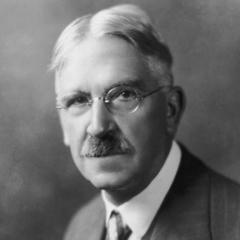
John Dewey
John Dewey was an American philosopher and educator, born on October 20, 1859, and died on June 1, 1952. He was a leading figure in the philosophy of pragmatism and had a profound impact on 20th-century education, philosophy, and the social sciences. more
You May Also Like
Source: The Middle Works of John Dewey, 1899-1924, Volume 9: 1916, Democracy and Education
Source: Democracy and Education: Top American Authors
Source: Democracy and Education: Top American Authors
Source: Democracy And Education
Source: Democracy and Education: Top American Authors
Source: Democracy And Education
“It is a familiar and significant saying that a problem well put is half-solved.”
Source: The Later Works, 1925-1953: 1938
Source: The Later Works, 1925-1953: 1938-1939
“Democracy means the belief that humanistic culture should prevail.”
Source: The Later Works, 1925-1953: 1938-1939
Source: Democracy and Education: Top American Authors