“A sampler of England's hottest 'chefs' would include a mostly hairless young blond lad named Jamie Oliver, who is referred to as the Naked Chef. As best as I can comprehend, he's a really rich guy who pretends he scoots around on a Vespa, hangs out in some East End cold-water flat, and cooks green curry for his 'mates'. He's a TV chef, so few actually eat his food. I've never seen him naked. I believe the 'Naked' refers to his 'simple, straightforward, unadorned' food; though I gather that a great number of matronly housewives would like to believe otherwise. Every time I watch his show, I want to go back in time and bully him at school.”
Quote by Anthony Bourdain
Work
A Cook's Tour: Global Adventures in Extreme Cuisines
Browse quotes and source details for this work. more
Author
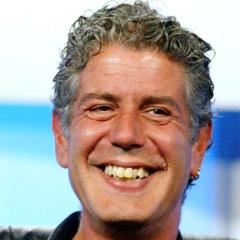
Anthony Bourdain
Anthony Bourdain, born on June 25, 1956, was an American chef, writer, and television personality. Known for his unique culinary style and exploration of global cuisine, he hosted popular shows such as 'No Reservations' and 'Parts Unknown'. more
You May Also Like
“my dear, we are all made of water. it's okay to rage. sometimes it's okay to rest. to recede.”
Source: A Thousand Flamingos
Source: The Omnivore's Dilemma: A Natural History of Four Meals
Source: The Art of Eating
Source: Catching Fire
Source: How to Cook a Wolf
Source: Bound to Accept
“Nobody knows the truffles I've seen.”
Source: Nobody Knows the Truffles I've Seen
“Anisette! You will eat your food, not demonstrate aerial warfare across the table with it.”
Source: Raventide
Source: Rilke's Book of Hours: Love Poems to God
“I like rice. Rice is great if you're hungry and want 2000 of something.”