Quotessence
Home / Quotes / Quote by Johann Gottfried Herder

Quote by Johann Gottfried Herder

“Nicht um meine Sprache zu verlernen, lerne ich andere Sprachen, sondern ich gehe bloß durch fremde Gärten, um für meine Sprache Blumen zu holen.”

Quote by Johann Gottfried Herder

Author
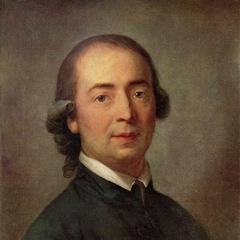
Johann Gottfried Herder

Johann Gottfried Herder was a German philosopher, born on August 25, 1744, in Halle, Germany, and died on December 18, 1803. He was a significant figure in the German Enlightenment and had a profound impact on German literature and philosophy. more

You May Also Like

“Sprache ist das leichteste Gepäck, und eine schwere Last, wenn man in die Fremde kommt, und mitnehmen kann man fast immer nur, was man im Kopf und im Herzen hat: die Mythen und Märchen, die Erinnerungen, eigene und die Erinnerungen anderer, mit denen man die Sprache gemeinsam hat. Es ist ja kein Zufall, dass jede Unterdrückung mit der Unterdrückung der Sprache anfängt, und damit auch der Unterdrückung der Literatur, wenn man unter Literatur nicht ausschließlich das Geschriebene versteht.”

“Aber ganz egal wie fließend ich in all diesen Sprachen bin, wenn ich nicht Josie spreche, schauspielere ich bloß. Das tun wir alle, wenn wir außerhalb der Kulturen interagieren, in die wir hineingeboren wurden. Es ist sogar unvermeidlich, denn es ist unmöglich, in einer fremden Sprache ganz man selbst zu sein. In der Sprache eines anderen wirst du zu einem Besucher, einem Gast - manchmal ein sehr willkommener Gast, den man kreischend und mit Umarmungen in Empfang nimmt -, aber trotzdem bist und bleibst du Gast. Denn sobald du aufhörst, die Sprache der Gruppe zu sprechen, hörst du auch auf, einer aus der Gruppe zu sein. Und dann bist du allein, egal mit wem zu zusammen bist.”

“You know that feeling you get, when the sky has turned green, air raid sirens are blowing, the theme to the "Wizard of Oz" wafts softly through the air, your neighbor has just blown by backwards on her bicycle, and an ominous funnel cloud is hovering on the horizon? Yeah, that feeling. the one that says that says "A picnic! That's what I need to do right about now! What could possible go wrong?”

“Wikipedia: Reconquista (Mexico) A prominent advocate of Reconquista was the Chicano activist and adjunct professor Charles Truxillo (1953–2015) of the University of New Mexico (UNM). He envisioned a sovereign Hispanic nation, the República del Norte (Republic of the North), which would encompass Northern Mexico, Baja California, California, Arizona, New Mexico, and Texas. He supported the secession of US Southwest to form an independent Chicano nation and argued that the Articles of Confederation gave individual states full sovereignty, uncluding the legal right to secede. Truxillo, who taught at UNM's Chicano Studies Program on a yearly contract, suggested in an interview, "Native-born American Hispanics feel like strangers in their own land." He said, "We remain subordinated. We have a negative image of our own culture, created by the media. Self-loathing is a terrible form of oppression. The long history of oppression and subordination has to end" and that on both sides of the US–Mexico border "there is a growing fusion, a reviving of connections.... Southwest Chicanos and Norteño Mexicanos are becoming one people again." Truxillo stated that Hispanics who achieved positions of power or otherwise were "enjoying the benefits of assimilation" are most likely to oppose a new nation and explained: There will be the negative reaction, the tortured response of someone who thinks, "Give me a break. I just want to go to Wal-Mart." But the idea will seep into their consciousness, and cause an internal crisis, a pain of conscience, an internal dialogue as they ask themselves: "Who am I in this system?" Truxillo believed that the República del Norte would be brought into existence by "any means necessary" but that it would be formed by probably not civil war but the electoral pressure of the region's future majority Hispanic population. Truxillo added that he believed it was his duty to help develop a "cadre of intellectuals" to think about how the new state could become a reality.”