Quotessence
Home / Quotes / Quote by Richard Wagner

Quote by Richard Wagner

Work

The Amateur's Guide to Death and Dying: Enhancing the End of Life

Browse quotes and source details for this work. more

Author
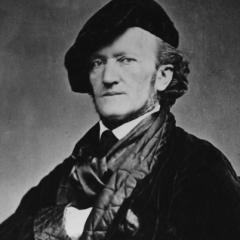
Richard Wagner
Richard Wagner

Richard Wagner, a German composer, was born on May 22, 1813, in Leipzig and died on February 13, 1883, in Venice. He is one of the most important composers of the Romantic era, known for his grand opera works such as 'The Ring of the Nibelung' and 'Tristan and Isolde'. Wagner's musical theories have had a profound impact on subsequent composers. more

You May Also Like

“Technological society has forgotten what scholars call the 'dying role' and its importance to people as life approaches its end. People want to share memories, pass on wisdoms and keepsakes, settle relationships, establish their legacies, make peace with God, and ensure that those who are left behind will be okay. They want to end their stories on their own terms. This role is, observers argue, among life's most important, for both the dying and those left behind. And if it is, the way we deny people this role, out of obtuseness and neglect, is cause for everlasting shame. Over and over, we in medicine inflict deep gouges at the end of people's lives and then stand oblivious to the harm done.”

“Many a death was precipitated by the food, the job, or the medication whose main function was to postpone it.”

“Wake up. If your eyes are sleeping then wipe them gently. You need to be awake for this. It is a matter of life and death. Wake up! If your mind is sleeping then shake it quickly. You need to be awake for this. It is a matter of life and death. Wake up, I said! If your heart is sleeping then beat your chest! You need to be awake for life! You need to be awake for love! It is a matter of living and being alive.”

“Dying in one’s fourth decade is unusual now, but dying is not. “The thing about lung cancer is that it’s not exotic,” Paul wrote in an email to his best friend, Robin. “The reader can get into these shoes, walk a bit, and say, ‘So that’s what it looks like from here. Sooner or later, I’ll be back here in my own shoes.’ That’s what I’m aiming for, I think. Not the sensationalism of dying and not the exhortations to gather rosebuds but: Here’s what lies up ahead on the road.” Of course, he did more than just describe the terrain. He traversed it bravely.”