Quotessence
Home / Quotes / Quote by Alan Macfarlane

Quote by Alan Macfarlane

Author

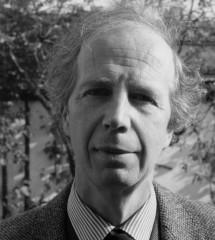
Alan Macfarlane
Alan Macfarlane

Alan Macfarlane is a distinguished British historian and sociologist, born on December 20, 1941. He is recognized for his extensive work in the fields of social history and the history of the family. more

You May Also Like

“Life is a tiring business indeed. Soy sauce runs out. Milk runs out. Dishwashing detergent runs out. Lancôme lipsticks—I thought I had stockpiled several years' worth—run out. Dust underneath the dining table becomes dust balls. Newspapers and magazines pile up, and so does laundry. E-mail and junk mail keep coming. When occasion demands, I make myself presentable and I present myself. I listen to my sister's same old complaints on the phone. I withdraw money for my elderly mother, whose tongue works fine but whose body is a mess. I contact her caseworker. And now I have reached a stage in life when my own health is prone to betray me.”

“And yet, as you all know, joining humanity is never a simple matter. By beginning to live the same temporality as Westerners, the Japanese now had to live two temporalities simultaneously. On the one hand, there was Time with a capital "T," which flows in the West. On the other hand, there was time with a small "t," which flows in Japan. Moreover, from that point on, the latter could exist only in relation to the former. It could no longer exist independently, yet it could not be the same as the other, either. If I, as a Japanese, find this new historical situation a bit tragic, it's not because Japanese people now had a live in two temporalities. It's rather because as a result of having to do so, they had no choice but to enter the asymmetrical relationship that had marked and continues to mark the modern world—the asymmetrical relationship between the West and the non-West, which is tantamount, however abstractly, to the asymmetrical relationship between what is universal and all the rest that is merely particular.”

“No importa tanto la diferenciación entre el progreso representado por el ahorro de energía (que simplifica la vida cotidiana) o por la expansión de energía (que potencia nuestras aspiraciones o "aficiones" naturales), sino el acento puesto en la excesiva velocidad con que estas transformaciones han afectado al Japón, como consecuencia de la procedencia externa de los estímulos que, al no ser fruto de una secuencia generado intrínsecamente, ha obligado a una apresurada (y por ello superficial) asimilación de los cambios (muchos en muy poco tiempo), lo cual ha llegado a provocar una auténtica "angustia existencial.”

“Las conclusiones más significativas se refieren a la necesidad de que cada individuo se forme por sí mismo su propia opinión de la realidad sin aceptar acríticamente la autoridad de los maestros occidentales, el deber moral de usar los propios dones o bienes (inteligencia, poder, dinero) teniendo siempre presente una proyección social, la obligación de respetar la libertad de los demás al tiempo que se defiende la propia o la posibilidad de cohonestar la (prioritaria) autoexigencia personal con otros valores respetables como el servicio a la nación. Al final, el discurso se transforma, a partir de una advertencia a los jóvenes japoneses de 1914, en un alegato a favor de la independencia personal, de la libertad y de la tolerancia, es decir, en una afirmación de valores humanistas de significado universal.”

“In order for Japan to become an equal member of the international community, the western perception of time had to be accepted. The western calendar was adopted with much complaint in 1872, with the decision that the third day of the succeeding twelfth month would become the first day of 1873. The decree added: On this day a ceremony…will be held, and the Emperor will inform the sun goddess and the imperial ancestors of the change…. The day will be divided into 24 hours instead of twelve two-hour periods, as hitherto.”

“With each retelling, Saigo’s composure grew greater, his soliloquy to Beppu longer, and the poignancy of the moment more intense. Because Saigo had come to represent samurai valor, his death had to represent samurai tradition. Physiology notwithstanding, tradition demanded that Saigo sit on a shattered hip and serenely ask Beppu to help him die. Saigo had become a legend, and the Japanese media decided to print the legend, not the man.”

“¿Será esto orgullo, o qué será? Yo te quiero y te querré siempre; pero deseo ser libre. Por eso ambiciono un medio de vivir; cosa difícil, ¿verdad? Saturna me pone en solfa, y dice que no hay más que tres carreras para las mujeres: el matrimonio, el teatro y… Ninguna de las tres me hace gracia. Buscaremos otra. Pero yo pregunto: ¿es locura poseer un arte, cultivarlo y vivir de él? ¿Tan poco entiendo del mundo que tengo por posible lo imposible?”

“Il nous faut encore expliquer quels liens unissaient Tristana, car tel était le nom de la jolie jeune fille, au grand don Lope, seigneur et maître de ce groupe, qui ne constituait pas à proprement parler une famille. Dans le voisinage, et parmi les rares personnes qui débarquaient un moment chez don Lope pour faire une visite ou pour espionner, il y avait des versions pour tous les goûts. On voyait l’emporter tour à tour, sur ce point capital, telle ou telle opinion ; durant un laps de temps de deux ou trois moi on tient pour vérité d’Evangile que cette demoiselle était la nièce de notre personnage, et il se trouva que des voisins qui l’avaient entendu dire « papa », comme les poupées qui parlent.”

“verligen-Szene Êrec was biderbe unde guot, ritterlîche stuont sîn muot ê er wîp genaeme und hin heim kaeme: nû sô er heim komen ist, dô kêrte er allen sînen list an vrouwen Ênîten minne. sich vlizzen sîne sinne wie er alle sîne sache wante zuo gemache. sîn site er wandeln began. als er nie würde der man, alsô vertreip er den tac. des morgens er nider lac, daz er sîn wîp trûte unz daz man messe lûte. sô stuonden si ûf gelîche vil unmüezeclîche. ze handen si sich viengen, zer kappeln si giengen: dâ was ir tweln alsô lanc unz daz man messe gesanc. diz was sîn meistiu arbeit: sô was der imbîz bereit. swie schiere man die tische ûf zôch, mit sînem wîbe er dô vlôch ze bette von den liuten. dâ huop sich aber triuten. von danne enkam er aber nie unz er ze naht ze tische gie. (Erec war rechtschaffen und gut, sein Geist war ritterlich gewesen, bevor er eine Frau genommen hatte und nach Hause zurückgekehrt war. Nachdem er jetzt zu Hause ist, wendete er alle seine Gedanken an die Liebe Enites. Sein Verstand richtete sich nur darauf, wie er alles zu seiner Bequemlichkeit einrichten könne. Er änderte seine Gewohnheiten. Als sei er nie ein Mann geworden, so vertrieb er den Tag. Morgens legte er sich nieder, um seine Frau zu lieben, bis man zur Messe läutete. Dann standen sie beide eilig auf. Sie nahmen sich bei der Hand und gingen zur Kapelle; dort blieben sie gerade so lange wie man die Messe sang. Das war seine größte Mühe; dann war schon das Essen fertig. Sobald man die Tische hochgezogen hatte, eilte er mit seiner Frau von den Leuten weg ins Bett. Da ging die Liebe von neuem an. Von dort kam er nicht mehr weg, bis er zum Abendessen ging.)”